Practice Case
A learner asks whether this public page can explain the annual card and exactly when jokers work. What is the safest answer?
Learn
A spoiler-safe workflow for using your official card without turning public notes into a replacement card.
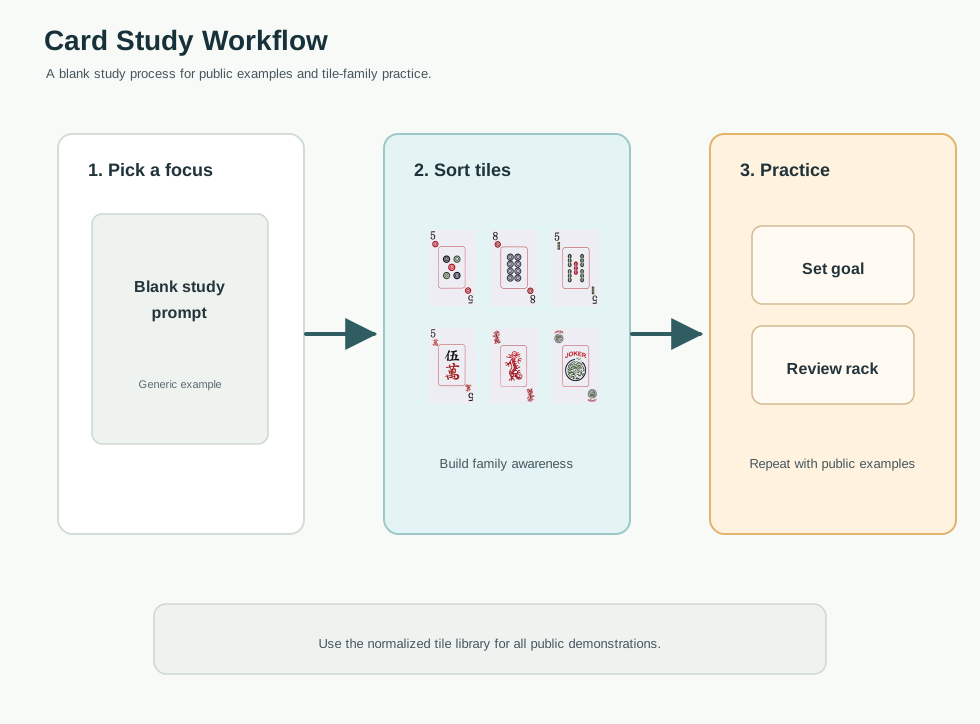
The public lesson should teach a method, not the card itself. A beginner can learn to scan broad printed areas, notice tile families, shortlist a few private possibilities, and compare those possibilities to rack evidence without copying lines, values, layout, or shorthand.
Use this table-safe sentence: I am using my official card for exact details, and I am using this lesson for the study process. That sentence keeps the site from becoming a replacement card.
Can a public lesson explain the annual card? It can explain how to study the card, how to separate broad sections from exact details, and how to compare private possibilities to rack evidence. It should not reproduce card lines, layout, official shorthand, score values, or a reconstructable batch of hands.
How should beginners study without copying it? Use a private workflow: scan the official card, shortlist a few private possibilities, compare each one to rack evidence, and verify exact requirements on the official card before acting. Public notes should say what process was used, not what protected line was chosen.
When can jokers be used? Treat jokers as limited substitutes, not universal wild tiles. Beginners should check the group type, visible exposure context, and the official or table-agreed rule before relying on a joker. Use the joker lessons for table operations, and keep exact annual-card fit private.
What is a joker exchange? At a high level, a player may notice an exposed joker and ask whether a natural tile creates a table-legal exchange opportunity. The safe beginner habit is to pause, confirm timing, and use the official or table-agreed rule before acting rather than chasing every visible joker.
Practice Case
A learner asks whether this public page can explain the annual card and exactly when jokers work. What is the safest answer?
Step 1: scan the official card privately for broad organizing cues. Do not copy the arrangement into public notes. Step 2: shortlist only two or three private possibilities that seem connected to your rack. Step 3: compare each possibility to rack evidence. Step 4: verify exact details on the official card before acting.
The comparison step is where beginners learn the most. Ask: what does my rack already support, what tiles are merely interesting, and what would force me to break too much structure? The answer should be about evidence, not memorized protected text.
A beginner opens the official card and tries to evaluate every option at once.
What should they do instead?
Answer: Shortlist only a few directions and compare them to rack evidence.
The card is easier to use when the learner narrows attention. Public notes should teach this workflow, not reproduce the card.
A learner finds two private directions on their official card that might fit the rack, but neither is certain yet.
What is the next study action?
Answer: Compare both directions to rack evidence and keep the stronger one as a tentative private focus.
A shortlist is not a public card copy and not a commitment. It narrows attention while preserving exact details on the official card.
A public-safe note says: I narrowed to two private possibilities, checked which one my rack supports, and verified exact requirements on my official card. It does not list the exact hand, card location, score value, official shorthand, or protected pattern.
If a learner wants to remember a mistake, write the repair instead of the protected target: I started with the card before sorting my rack; next time I will sort rack evidence first, then check exact details privately.
A learner drafts a public practice note that includes exact annual-card targets, shorthand, and values from their official card.
How should the note be rewritten?
Answer: Rewrite it as method language: scan privately, shortlist privately, compare to rack evidence, and verify exact details on the official card.
The learning value is the process. Publishing exact card structure would turn the note into replacement material.
A player remembers a pattern from a previous year and wants to use that memory instead of checking the current official card.
What should a beginner do?
Answer: Check the current official card or table-agreed source before relying on memory.
Card-specific details can change. Public lessons should not validate exact targets from memory.
Before the Charleston, card study helps the learner notice broad families of support without announcing exact targets. During the hand, it helps them decide whether a new tile strengthens a private direction, weakens it, or deserves a quiet backup question.
At the table, use process language: this rack has support for one private direction, or I need to verify exact details on my official card. Do not coach another player's hand by naming protected targets from the card.
A beginner opens the card before sorting the rack and starts chasing a direction that has little support in their tiles.
What repair sequence should they use?
Answer: Sort the rack first, name the strongest evidence, then check the official card privately for directions that fit that evidence.
Card reading is most useful when it responds to the rack instead of replacing rack reading.
Practice Case
What is safe to publish in a public card-reading lesson?
Practice Case
When should exact annual-card values be checked?
Practice Case
What should a learner compare against the card privately?
Practice Case
Which sequence is safest for a beginner studying the card?
Practice Case
What should a public lesson say after a learner makes a card-reading mistake?
Practice Case
A learner has not sorted their rack yet. What should happen before deeper card study?
A learner is unsure how to describe their study question at the table without revealing exact card content.
What can they say?
Answer: I am checking whether my rack supports this private direction; I will verify exact details on my official card.
The phrase explains the process and keeps exact annual-card content private.