A short, repeatable study plan that turns beginner mistakes into one focused table habit at a time.
beginner28 mindiagramexercisecaseglossary
Learning Objectives
Use a short practice routine instead of unfocused study.
Rotate tile recognition, Charleston, joker, and discard skills.
Build a 15-minute and 30-minute session plan.
Review one table decision without copying annual-card content.
Choose one repair habit for the next practice hand.
Use card-safe private verification when practice touches the official card.
Use a short practice loop
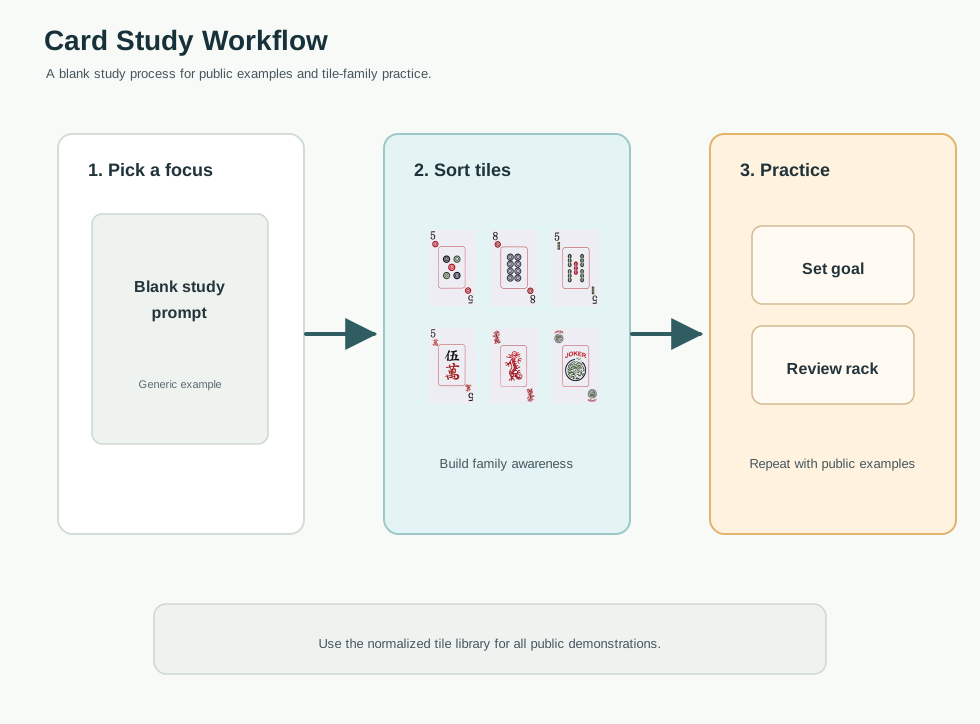
A public-safe study loop: choose one focus, practice briefly, review one decision, and stop with one question.
A useful beginner practice loop has four parts: warm up, drill one focus skill, review one table decision, and choose one repair habit. The point is not to finish every topic. The point is to make the next hand a little cleaner.
Keep practice public-safe. If the session touches card study, use the learner's own official card privately for exact details. Shared notes should describe the process: scan, shortlist, compare to rack evidence, and verify privately.
Rotate one skill at a time
A simple session can be five minutes naming tiles, five minutes choosing pass candidates, and five minutes reviewing one discard choice. Keep the focus narrow enough to repeat.
For a 15-minute session, choose three five-minute blocks. For a 30-minute session, repeat the loop twice: once slowly for accuracy, then once at a natural table pace. Do not add a second focus until the first one feels stable.
Build a session from table flow
Start with recognition because every later decision depends on knowing what is in front of you. Then sort the rack into support, maybe, and release candidates. After that, practice one table operation: a Charleston pass, a discard scan, a call decision, or a joker-awareness check.
End with one review sentence: next time I will scan exposures before discarding, or next time I will receive and inspect before choosing a pass. That review sentence becomes the next session's focus.
Case: the 15-minute reset
A learner has limited energy and wants a useful session without playing a full hand.
What routine should they use?
Show answer
Answer: Use five minutes of tile naming, five minutes of rack sorting or pass choices, and five minutes reviewing one discard or call decision.
The session follows table flow without overwhelming the learner or requiring protected annual-card content.
Warm up recognition first.
Practice one table operation.
End with one review question.
Case: card study enters the routine
A learner wants to use the official card during practice and starts writing exact details into a shared note.
What should the shared note say instead?
Show answer
Answer: Write the method: I checked the official card privately, compared it to rack evidence, and chose one process question for next time.
The routine can include card study without turning public notes into annual-card replacement material.
Exact details stay on the official card.
Shared notes should be method-only.
Practice can review process without protected targets.
Review one decision, not the whole hand
Good review questions are small: did I sort before passing, did I scan exposures before discarding, did I call for a clear reason, did I check joker context, or did I verify exact card details privately? Avoid reviewing every tile in the hand at once.
Use a two-column note: decision and repair. The decision can be a generic table moment. The repair should be a future action. Do not write protected card targets, official shorthand, values, or reconstructable hand details.
Case: too many mistakes to review
After one hand, a learner lists six mistakes and feels stuck.
What should they review first?
Show answer
Answer: Choose the earliest repeatable table habit, such as sorting before passing or scanning before discarding.
One repair habit is easier to practice than a long list of warnings.
Pick one repair.
Choose a habit that appears often.
Use the next hand as the drill.
Case: speed hides the error
A learner plays quickly and wins a few turns, but cannot explain why their discards were reasonable.
What should the next practice focus be?
Show answer
Answer: Slow down and name the rack, discard, and exposure scan before each practice discard.
Speed without explanation can hide unstable habits. Accuracy should lead, then pace can return.
Accuracy before speed.
Name the scan out loud during practice.
Pace returns after the habit stabilizes.
Practice cases with answers
Practice Case
Which 15-minute routine is best for a new learner?
Practice Case
A learner makes several tile-recognition mistakes during warmup. What should they do next?
Practice Case
What should a learner write after reviewing one practice hand?
Practice Case
A learner wants to add official-card study to practice. What is the safest shared-note habit?
Practice Case
Which 30-minute routine keeps focus without overload?
Practice Case
A learner feels overwhelmed after a practice hand. What is the best next step?
Case: the unfocused study night
A learner plays for two hours, studies several topics, and leaves unsure what improved.
How should the next session change?
Show answer
Answer: Pick one focus skill, practice it briefly, review one decision, and write one question for next time.
A narrow routine makes progress visible and keeps public practice separate from annual-card replacement content.
Practice accuracy before speed.
End with one concrete review question.
Keep public review notes method-only.
Common Mistakes
Mistake: practicing too many skills at once. Repair: choose one focus skill for the session.
Mistake: measuring progress by speed before accuracy. Repair: slow the drill until the steps are reliable.
Mistake: reviewing a mistake by naming protected card targets. Repair: review the table habit instead.
Mistake: skipping warmup because it feels too basic. Repair: use tile naming or rack sorting to stabilize the session.
Mistake: playing several hands without reflection. Repair: stop after one hand and write one repair question.
Mistake: turning practice into coaching another player's exact hand. Repair: use process language and private official-card checks.