nmjlmajong

Learn

American Mahjong Tiles

A beginner tour of tile counts, suits, winds, dragons, flowers, jokers, and table language.

beginner40 mindiagramexercisecaseglossary

Learning Objectives

  • Recognize the main American Mahjong tile families.
  • Know the standard 152 playable tile composition used by many American Mahjong sets.
  • Separate numbered suits from named tiles and special tiles.
  • Explain the common dragon-to-suit relationship without using the page as an annual-card replacement.
  • Use beginner-safe table language for suits, honors, flowers, and jokers.
  • Understand common table terms such as rack, wall, discard, call, exposure, pung, kong, and Mah Jongg.
  • Sort a mixed rack into recognition groups before setup or strategy.

Study the tile families

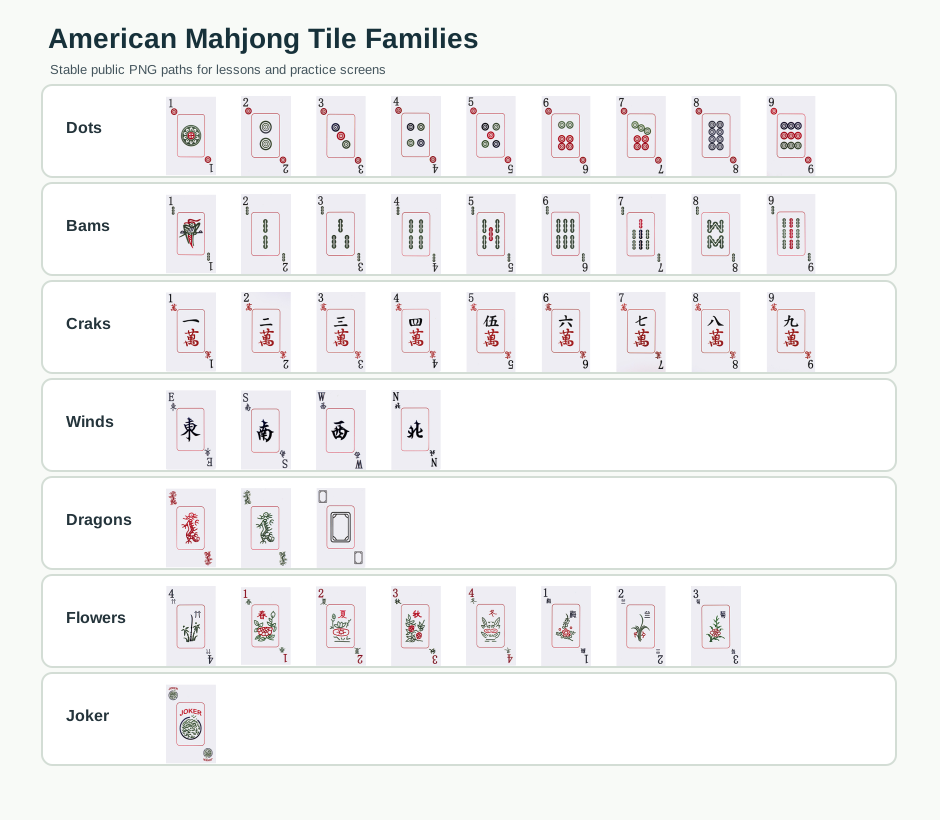
American Mahjong tile family grid showing bams, craks, dots, winds, dragons, flowers, and joker examples.
Public teaching grid generated from local tile images. It does not reproduce an annual card.

Start with three buckets: numbered suits, named honor tiles, and special tiles. The numbered suits are bams, craks, and dots. The named honor tiles are winds and dragons. Flowers and jokers are special tiles that beginners should recognize by name before trying to use them in strategy.

A practical first pass is to ignore hand direction completely. Put all numbered suit tiles together, pull winds and dragons into a second group, and set flowers and jokers apart. Once the rack is no longer visually crowded, naming each tile becomes much easier.

What is in one American Mahjong set

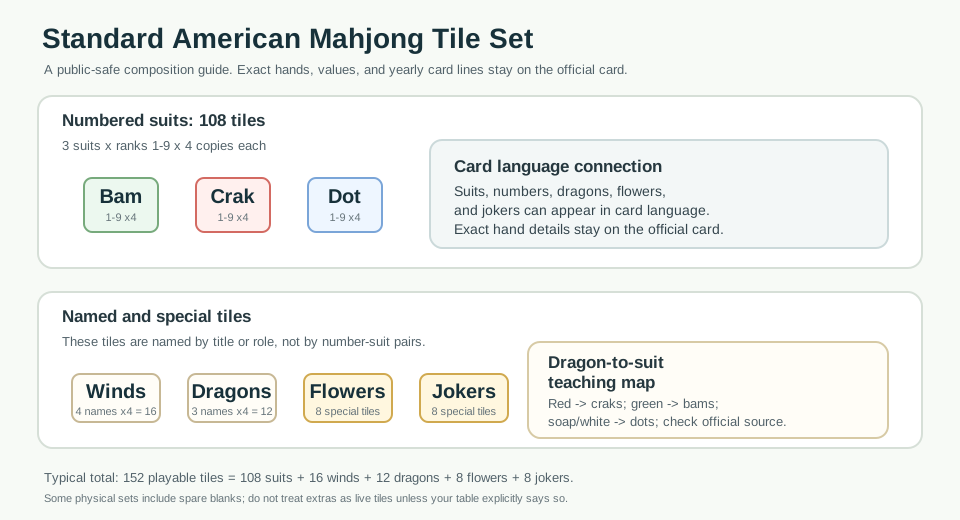
American Mahjong tile composition diagram showing numbered suits, winds, dragons, flowers, jokers, and common dragon to suit relationship.
A public-safe tile composition map. It shows counts and language only; exact annual-card hands and values stay on the official card.

Numbered suit tiles are the main building blocks: bams, craks, and dots each have ranks one through nine, with four copies of each rank. In a rack sort, name them by number plus suit: one bam, nine crak, five dot. The card may later ask for specific numbers or suit relationships, but this page stops at recognition and safe vocabulary.

Winds and dragons are named tiles. Winds are east, south, west, and north. Dragons are commonly taught as red, green, and soap or white. A useful American Mahjong teaching relationship is red dragon with craks, green dragon with bams, and soap or white dragon with dots. This helps beginners read card language, but exact hand requirements still belong on the learner's own official or table-agreed card.

Flowers and jokers are special groups. Flowers are not ordinary numbered suit tiles, even when the artwork varies by set. Jokers are flexible only within the limits taught by the table and official source; during tile recognition, simply name the tile as joker instead of pretending it is already a particular suit tile.

Case: matching a dragon to a suit

A learner sees a green dragon and asks whether it belongs with dots because the artwork is not a bamboo picture.

What is the safe beginner explanation?

Show answer

Answer: Teach the common card-reading map: green dragon is associated with bams, red dragon with craks, and soap or white dragon with dots.

This explains the vocabulary relationship without revealing or replacing any annual-card hand line.

  • Dragons are named honor tiles, not numbered suit tiles.
  • The dragon-suit map helps card language make sense.
  • Exact use still depends on the official or table-agreed card.

Practice Case

Which statement describes the numbered suits in a standard American Mahjong set?

Core terms and table language

Use short table phrases when you are unsure: "What suit was that?" "Was that a discard?" "Is that exposure complete?" "Please pause while I confirm the tile name." Clear speech is part of good table flow, especially for beginners.

Case: table words come too fast

A beginner hears "call," "expose," and "discard" in one quick exchange and loses track of what happened.

What should they say?

Show answer

Answer: Say, "Please pause. Was that tile called, exposed, or discarded?"

The question asks for the table action, not strategy advice or protected card content. It keeps play clear.

  • Ask for the action word when table language moves too fast.
  • Clarifying vocabulary is normal beginner behavior.
  • Do not turn a vocabulary question into an annual-card hand discussion.

Practice Case

A player places a tile face up in the center after their turn. What is the best beginner word for that tile?

How to name what you see

A useful beginner script is: family first, detail second. Say “three dot,” “east wind,” “green dragon,” or “joker.” Accuracy matters more than speed because clear naming keeps the table synchronized.

If your set uses unfamiliar artwork, slow down instead of guessing. Ask: does this tile have a suit pattern and number, a wind or dragon title, flower art, or the word joker? That question keeps recognition separate from later lessons about passing, calling, scoring, or reading an official card.

What to do at the table

Use this four-step operation: 1. Separate numbered suit tiles from named and special tiles. 2. Sort numbered suits by family. 3. Name winds, dragons, flowers, and jokers out loud. 4. Only after the rack is sorted, move to setup, Charleston, or hand-direction questions.

When another player names a discard, listen for both parts of the name. If you hear only a number, ask which suit. If you hear only a nickname, ask what tile family it belongs to. Clear language prevents the table from moving on while a beginner is still decoding the tile.

Do not use this page as an annual-card shortcut. The job here is recognition: identify the tile in front of you. Exact hand requirements, values, and card-specific targets belong in the learner's own official or table-agreed source.

Special cases beginners meet

Case: unfamiliar flower art

A learner sees a tile with decorative plant art that does not match the flower picture they practiced with.

What should they do before calling it a numbered suit tile?

Show answer

Answer: Treat it as a flower candidate and ask the table or teacher to confirm.

Flower artwork varies across sets. The safe beginner move is to identify the family first, then confirm the table label.

  • Artwork can vary while the recognition group stays the same.
  • Ask a family question before guessing a strategy role.

Case: a table nickname

A player uses a dragon nickname the learner has not heard before.

What should the learner ask?

Show answer

Answer: Ask which dragon or tile family the nickname means.

Tables may use shorthand or local teaching language. Asking for the family keeps the game moving without pretending the learner already knows every nickname.

  • Nicknames are table language, not a reason to panic.
  • Clarifying a tile name is different from asking for card-specific strategy.

Case: a joker in a practice rack

A learner sees a joker and wants to name it as the tile they hope it will replace later.

What should they call it during recognition practice?

Show answer

Answer: Call it a joker.

Recognition practice names the tile itself. How and when a joker may help belongs in later joker and exposure lessons.

  • Name the tile before deciding its possible job.
  • Do not turn joker recognition into an annual-card example.

Practice cases with answers

Practice Case

A tile shows circle shapes and the number five. What should a beginner call it?

Practice Case

Which group should a beginner learn after the three numbered suits?

Case: a slow rack sort

A new player has mixed numbered tiles with winds and dragons and is trying to decide what to study first.

What should they do before thinking about hand direction?

Show answer

Answer: Sort by family and name each tile out loud.

Sorting turns a crowded rack into smaller visual groups. That makes later Charleston and discard decisions less chaotic.

  • Start with recognition, not speed.
  • Do not add annual-card strategy until tile names are stable.

Practice Case

A beginner is sorting a practice rack. Which group should winds and dragons go into?

Practice Case

A tile has the word joker. What should the learner call it during tile recognition practice?

Common Mistakes

  • Trying to memorize every tile before learning the families.
  • Confusing recognition practice with strategy practice.
  • Treating flowers and jokers like ordinary numbered suit tiles.
  • Guessing from artwork style instead of naming the tile family first.
  • Assuming a spare blank tile is live without table agreement.
  • Using a public lesson as a substitute for exact annual-card hand requirements.
  • Forgetting that dragon-suit relationships are a card-reading aid, not a complete strategy answer.

Next Lessons