Practice Case
A learner has no full table yet and asks how to prepare for a first class. What is the best setup-focused plan?
Learn
How the table, racks, walls, and dice fit together before play begins.
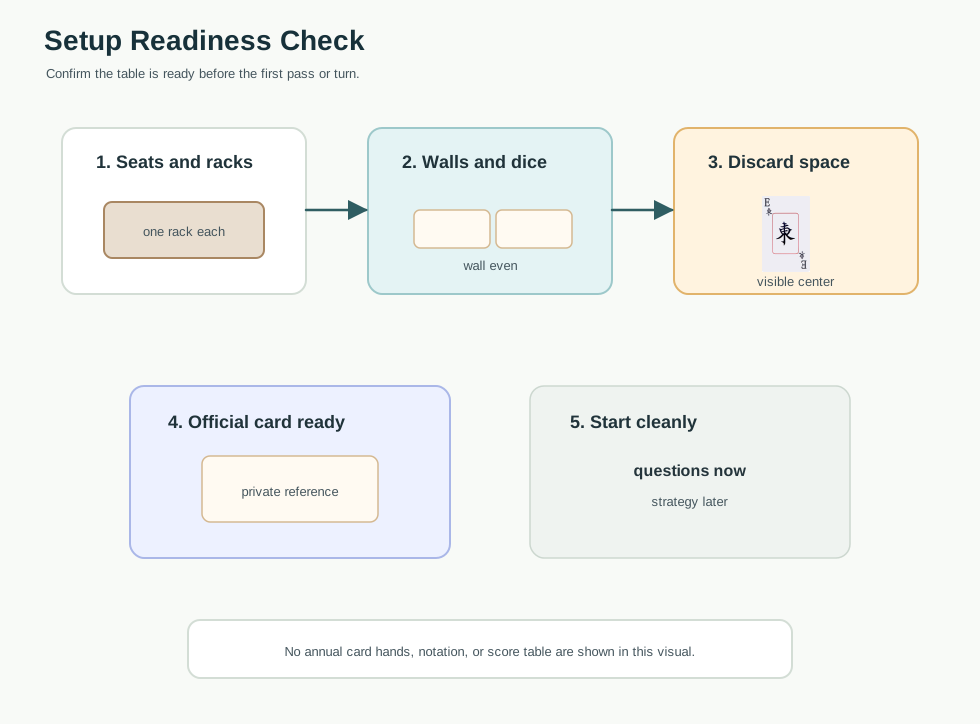
Think of setup as five visible zones: each player's seat and rack, the face-down walls, the shared discard area, the dice or start tool, and each player's own official or table-agreed reference. If those zones are clear, the first learning problem is the game, not the furniture.
Do not mix setup with annual-card study. The table can confirm that everyone has the right reference available without copying hand requirements, point values, card layout, or strategy notes into the public lesson.
A useful beginner script is: seat ready, rack ready, wall ready, discard space ready, card boundary understood. Say the checklist out loud before dealing so the first turn starts cleanly.
Use five table-readiness checks before play: every player has a rack, the walls are even, dice or start tools are available, the discard area is visible to everyone, and each learner knows to use their own official card for exact hand and scoring details. If any one piece is missing, pause setup rather than repairing during the first live turn.
A beginner-friendly table does one job at a time. First arrange the space, then build and straighten the walls, then confirm the start method, then deal or distribute tiles according to the table's rules, then move into the opening phase. This keeps equipment questions from interrupting the Charleston or the first discard.
What should you learn first? Start with tile names, table zones, the goal of declaring Mah Jongg, and the idea that exact annual-card details live on the learner's own official or table-agreed card. Do not begin by memorizing protected card lines.
Do you need a full table to practice? No. One learner can name tiles, sort a rack, build a wall, point to the discard area, and rehearse clear table language. Two learners can practice passing, pausing, and call timing. A full table is most useful later for live pace, table sound, and exposure awareness.
What should you bring to a first class? Ask the host what equipment is provided, then bring a way to take notes, a few process questions, and your own official or table-agreed reference if the class asks for one. Shared notes should capture habits and questions, not annual-card hand text, values, or layout.
Practice Case
A learner has no full table yet and asks how to prepare for a first class. What is the best setup-focused plan?
Use this seven-step setup flow: 1. Seat players where everyone can see the center. 2. Give each player a rack and clear personal space. 3. Build and straighten the walls. 4. Mark a shared discard area. 5. Confirm dice or the start method. 6. Confirm each learner has their own official reference for exact annual-card details. 7. Only then begin the dealing/start procedure used at that table.
If someone is new, add a teach-back before the first hand: ask them to point to the rack, wall, discard area, and official reference, then say what each one is for. The table learns more from this one-minute check than from correcting the same confusion during a live turn.
When a table uses a local habit for dice, wall break, seating, or start order, name it as a table habit before play begins. Beginners should not have to discover a variation after they have already touched tiles.
The walls are built and racks are ready, but two players expect different dice or start-order habits.
What should happen before tiles move?
Answer: Pause and agree on the start method for this table before dealing.
A start variation is easier to settle before anyone has a live rack. Calling it a table habit keeps the lesson from turning into a rules argument.
The racks fit, but the center is crowded with score notes, spare tiles, and personal items.
What is the setup repair?
Answer: Clear the center before dealing so discards and calls can be seen by everyone.
A crowded center turns later calls into memory tests. Clean space is part of fair beginner setup.
A learner is seated where the center is blocked, so they can hear discards but cannot reliably see them.
What should the table change?
Answer: Adjust seats, racks, or the discard area until the learner can see the shared center.
Calling and table awareness depend on hearing and seeing the discard. Setup should remove avoidable visibility problems.
Practice Case
Which check should happen before the first turn?
Practice Case
A new player asks where discarded tiles should go. What is the best beginner answer?
The dice are ready, but one wall is uneven and one player still does not have a rack.
What should the table fix before dealing?
Answer: Pause, give every player a rack, straighten the wall, and agree on the discard space.
A clean setup prevents early confusion from being mistaken for rules confusion.
Practice Case
The wall is straight and racks are ready, but the discard area is crowded with extra tiles and notes. What should the table do?
A learner is ready to build walls but cannot find their official card or agreed reference for exact annual hands and values.
What should the table do before the hand starts?
Answer: Pause and make sure the learner has their own official reference before strategy or scoring questions begin.
Public lessons can teach setup and method, but exact annual-card content should be checked from the official material.
Practice Case
Which setup sequence keeps a beginner table calm?
Practice Case
A table uses a dice habit the learner has not seen. What is the best beginner response?
Practice Case
What is the best bridge from setup into the next lesson?