How a beginner wins American Mahjong by matching a valid 14-tile hand, with 2026 card examples and local tile diagrams.
beginner46 mindiagramexercisecaseglossary
Learning Objectives
Explain that winning American Mahjong means completing one valid 14-tile hand from the current card.
Break a 2026 card example into Pair, Pung, Kong, Quint, Sextet, Single, and year groups.
Use card marks such as X and C to understand exposed-friendly versus concealed results.
Count at least twelve 2026 example hands from rule notation into complete tile groups.
Use a readiness checklist before declaring Mah Jongg.
Explain how printed shade markers affect suit and dragon choices in 2026 card examples.
Winning result: one valid 14-tile hand
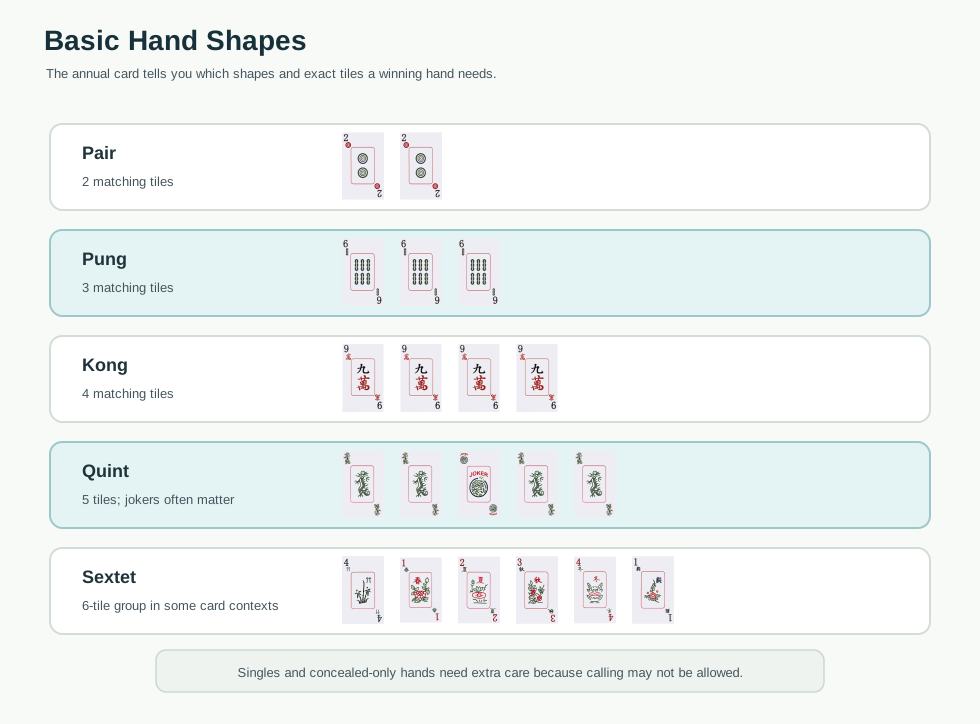
Before reading 2026 examples, learn the group sizes that make a result countable.
The final result is not simply having many useful tiles. A winning rack must match one valid card example as a complete 14-tile structure. The table should verify the hand before any scoring or settlement discussion.
A beginner should use this order: read the card example, split it into groups, translate each group into real tiles, count to fourteen, check exposed or concealed status, then decide whether the rack is ready to declare.
The 2026 examples below are teaching conversions from local structured source data into original diagrams. They are meant to explain how winning hands are assembled, not to replace table verification.
How to read a 2026 example into tile groups
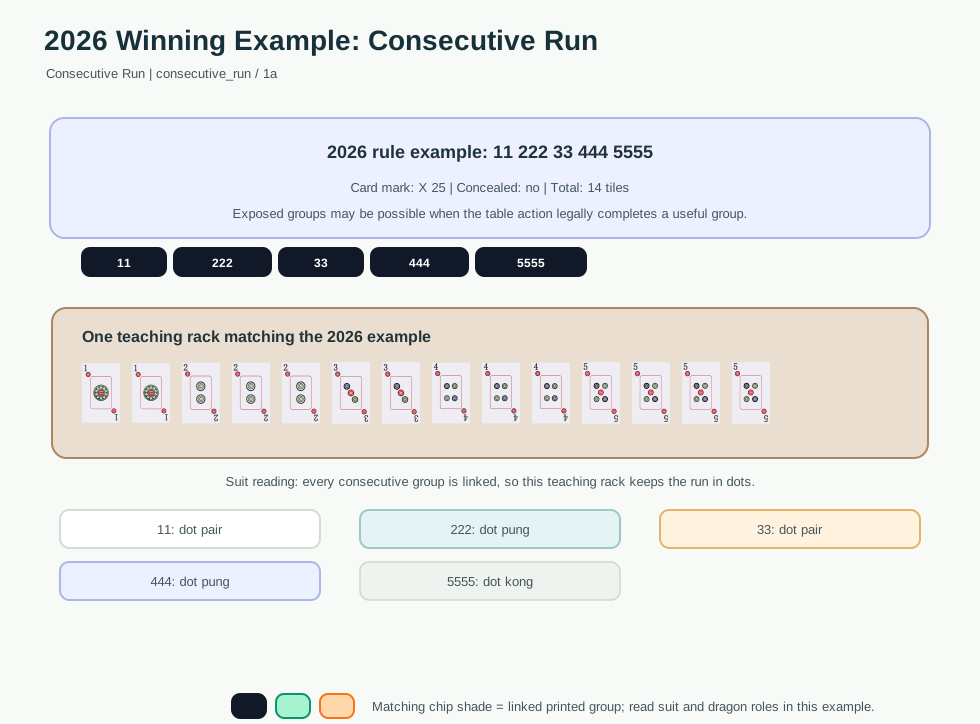
Notation is only the compressed instruction. The rack must still become real tiles. For example, 11 222 33 444 5555 means pair, pung, pair, pung, kong. The total is 2 + 3 + 2 + 3 + 4 = 14.
The mark beside a card example also matters. X examples are generally compatible with exposed play when a legal call completes a useful group. C examples are concealed and should not be exposed as ordinary partial groups.
A good table sentence is: I am not declaring because it looks close; I am declaring because every group in one card example is present and the exposed or concealed condition is satisfied.
How shaded markers affect a hand
Read each 2026 example in three passes: first split the notation into groups, then compare the shaded notation chips, then count the rack to 14. Skipping the shade pass can make the rack look complete when the suit or dragon relationship is wrong.
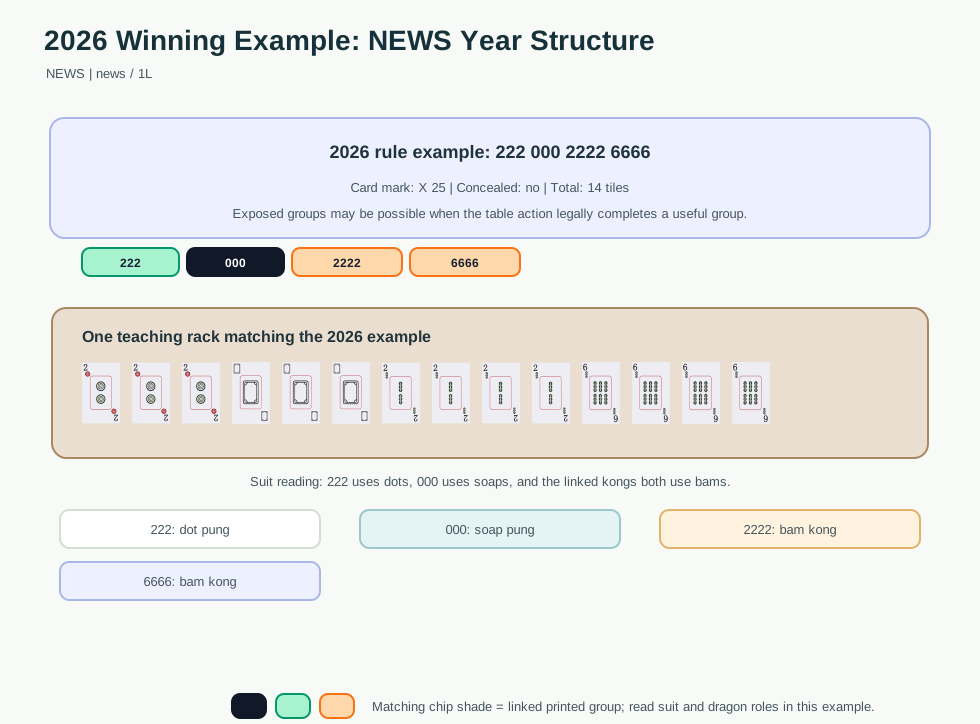
In 222 000 2222 6666, this lesson reads 222 as dots, 000 as soaps, and the final matching-shade kongs as bams. The shared shade does not merge 2222 and 6666; it tells the learner to keep their suit choice linked.
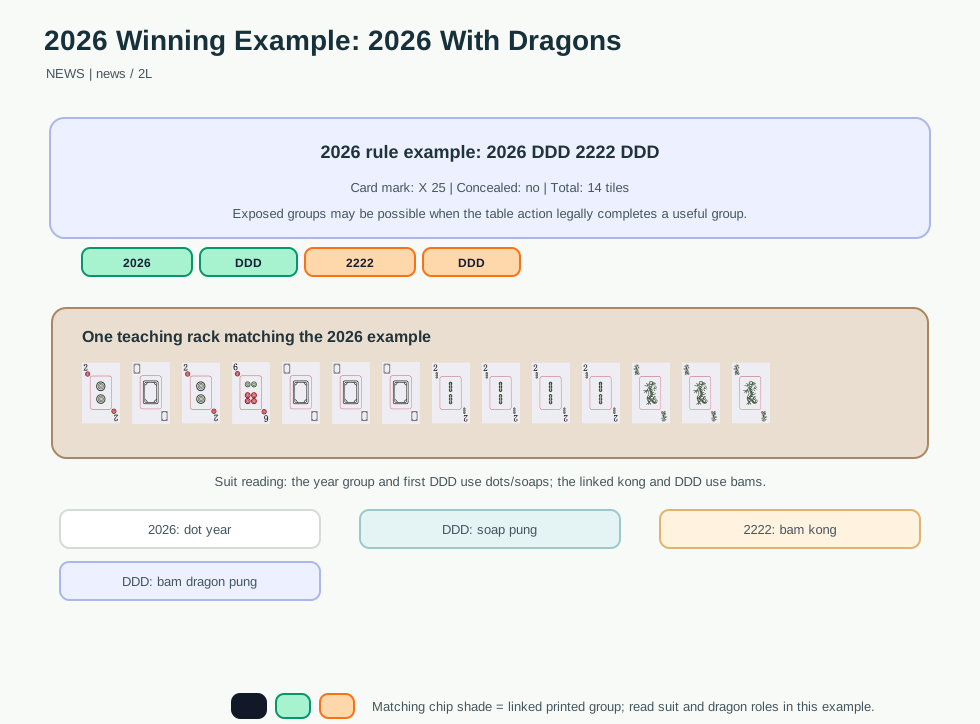
In 2026 DDD 2222 DDD, the year group uses dots and soaps, then its linked DDD uses soaps. The linked 2222 and final DDD use bams and the matching bam dragon. Shading does not override the card mark: C still means concealed, and X still requires a legal completed group before exposure.
2026 winning examples: exposed-friendly shapes
Example 1: NEWS year structure
2026 source example news / 1L: 222 000 2222 6666. Card mark: X 25. Concealed: no. Shade/suit reading: 222 is dots, 000 is soaps, and the final matching-shade kongs are both bams.
How does this rack become a winning Mah Jongg result?
Show answer
Answer: This example wins by completing four exact groups: a pung, another pung, a kong, and another kong for 14 tiles.
The result is not a loose theme. Count 3 + 3 + 4 + 4. Once the rack has all fourteen required tiles in those shapes, the player can verify and declare. In this teaching rack, the final two matching-shade kongs stay linked by using bams.
Count the groups before scoring.
A 14-tile result is required.
The card mark is checked after the hand is complete.
Shade/suit reading: 222 is dots, 000 is soaps, and 2222 plus 6666 are bam kongs.
Example 2: 2026 with dragon groups
2026 source example news / 2L: 2026 DDD 2222 DDD. Card mark: X 25. Concealed: no. Shade/suit reading: the 2026 group uses dots and soaps, its linked DDD uses soaps, and the linked 2222 plus final DDD use bams and the matching bam dragon.
How does this rack become a winning Mah Jongg result?
Show answer
Answer: The year group is one required part of the hand, followed by a dragon pung, a kong, and another dragon pung.
The shape count is 4 + 3 + 4 + 3. A beginner should read the year group as part of the target, not as decorative text. The shaded chips tell the learner which year or dragon chunks stay linked for suit and dragon choices.
Treat 2026 as tiles in the rack.
Dragon groups still need exact counts.
Verify all groups before announcing.
Shade/suit reading: dots and soaps form the year side; bams and the matching bam dragon form the kong side.
Example 3: 2468 even-number groups
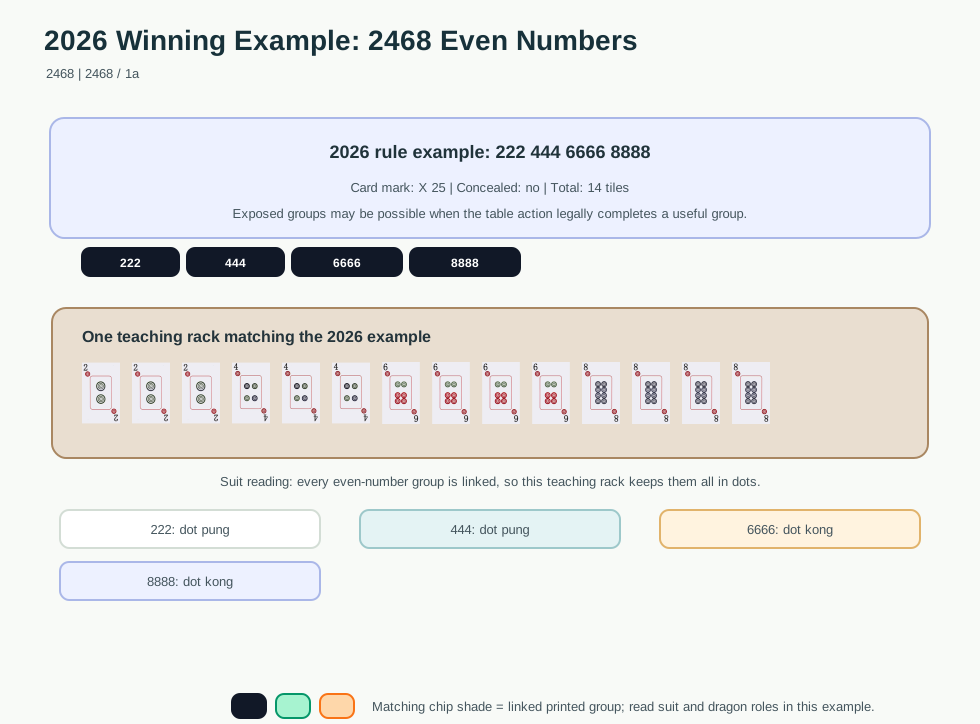
2026 source example 2468 / 1a: 222 444 6666 8888. Card mark: X 25. Concealed: no. Shade/suit reading: all four even-number chunks share one shade in this teaching rack, so 222, 444, 6666, and 8888 stay in dots.
How does this rack become a winning Mah Jongg result?
Show answer
Answer: This hand wins by completing even-number groups: 222, 444, 6666, and 8888.
The important beginner habit is to match both the numbers and the group sizes. Even-looking tiles are not enough unless the counts match. Here, the matching shaded chips keep the even-number groups in one suit.
Match number family and group size.
Pungs have three tiles.
Kongs have four tiles.
Shade/suit reading: all four even-number groups stay in dots for this teaching rack.
Example 5: any like numbers with flowers
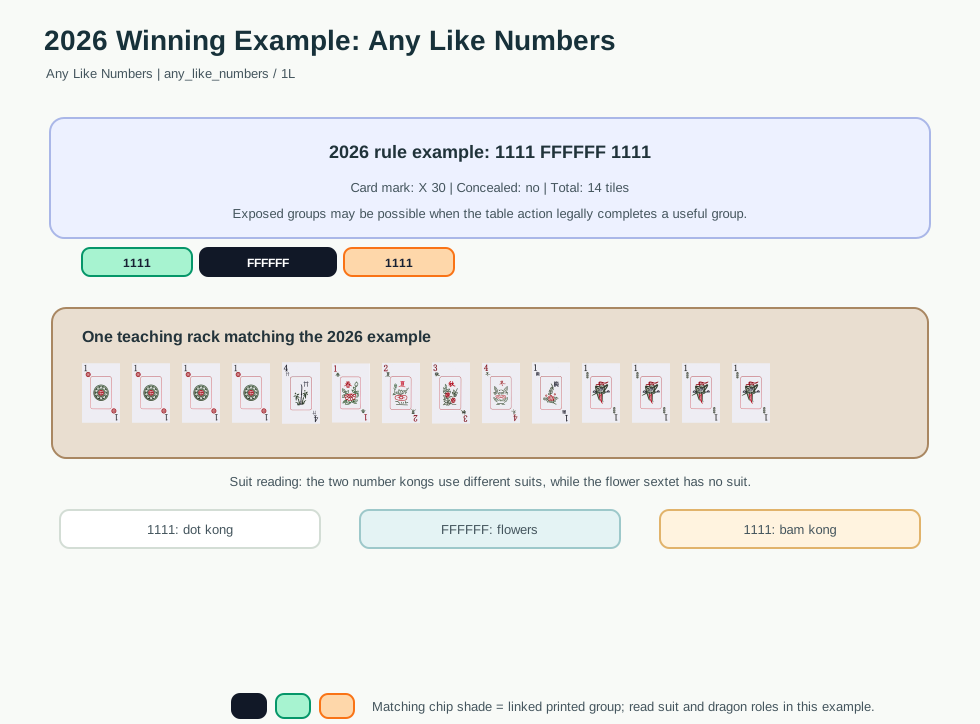
2026 source example any_like_numbers / 1L: 1111 FFFFFF 1111. Card mark: X 30. Concealed: no. Shade/suit reading: the number kongs use dots and bams, while the flower sextet has no suit; read shade and group size together.
How does this rack become a winning Mah Jongg result?
Show answer
Answer: This hand wins with a kong, a six-flower group, and another kong: 4 + 6 + 4 = 14.
Large flower groups are legal when the card asks for them. The learner still needs to count the exact group sizes instead of treating flowers as bonus tiles. The shaded chips separate the two number kongs from the flower group.
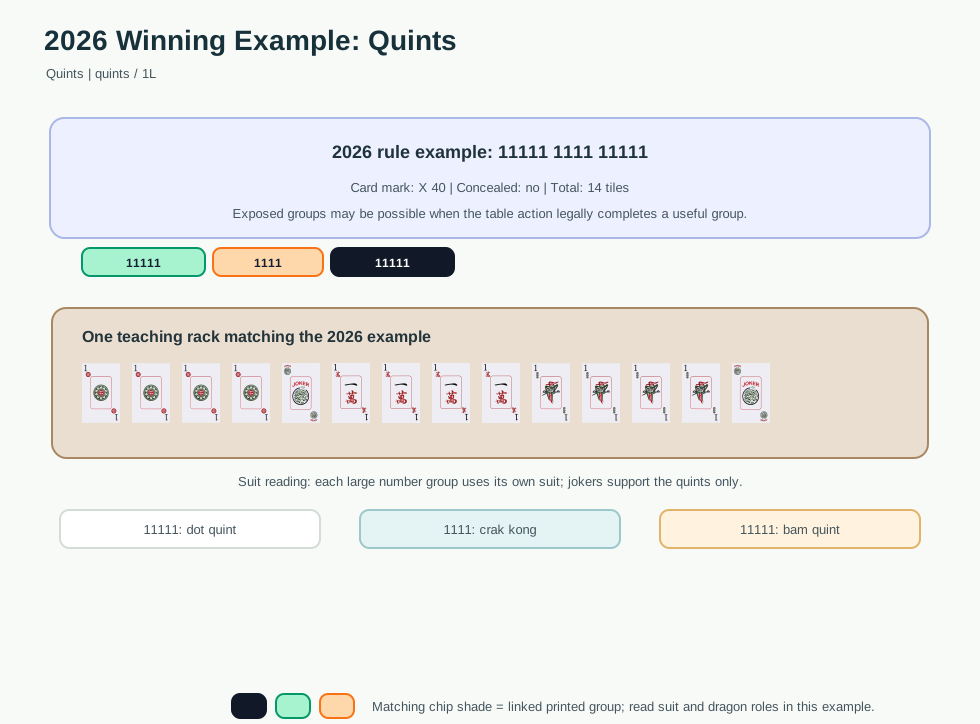
2026 source example quints / 1L: 11111 1111 11111. Card mark: X 40. Concealed: no. Shade/suit reading: the large number groups use separate suits in this teaching rack, and joker support does not erase the suit reading.
How does this rack become a winning Mah Jongg result?
Show answer
Answer: The hand wins by completing a quint, a kong, and a second quint for 14 tiles.
Because a set has only four natural copies of most tiles, a five-tile quint usually depends on joker support. The joker does not remove the need to match the card shape or the suit relationship shown by the shaded chips.
2026 source example consecutive_run / 1a: 11 222 33 444 5555. Card mark: X 25. Concealed: no. Shade/suit reading: all chunks share one shade, so the teaching rack keeps the run in dots.
How does this rack become a winning Mah Jongg result?
Show answer
Answer: This wins as pair, pung, pair, pung, kong across consecutive numbers.
A run example is not a straight in the usual card-game sense. It is a sequence of exact group sizes attached to consecutive numbers. The shared shading keeps the run in one suit for this teaching rack.
Pairs have two tiles.
Pungs have three tiles.
The final kong completes the 14-tile count.
Shade/suit reading: every group in the run uses dots.
Example 8: 13579 odd-number result
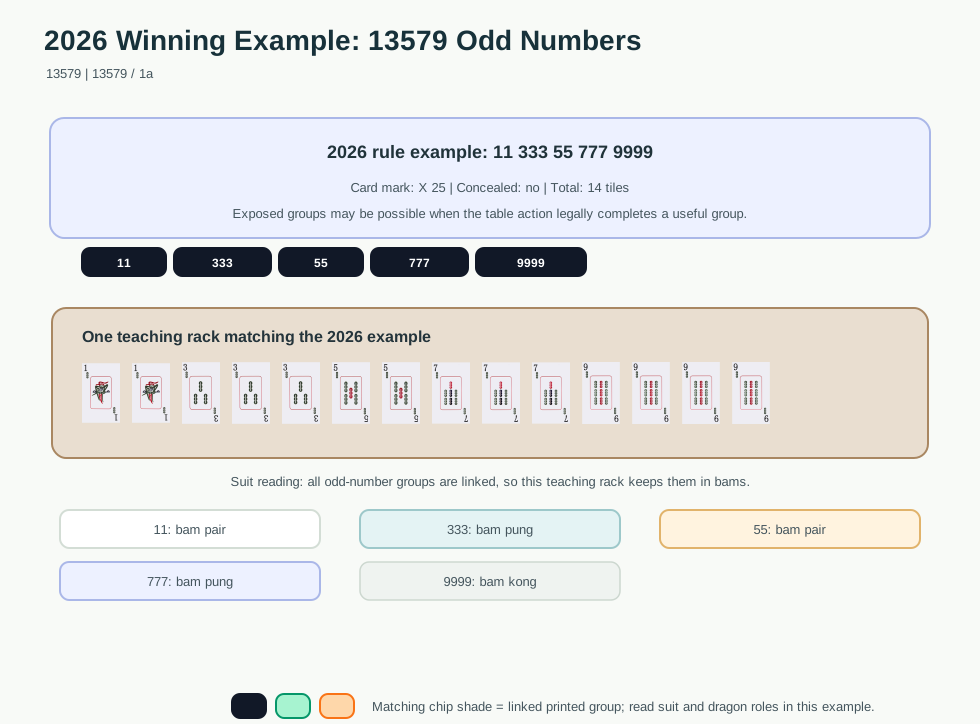
2026 source example 13579 / 1a: 11 333 55 777 9999. Card mark: X 25. Concealed: no. Shade/suit reading: all odd-number chunks share one shade, so the teaching rack keeps them in bams.
How does this rack become a winning Mah Jongg result?
Show answer
Answer: This wins through exact odd-number groups: pair, pung, pair, pung, and kong.
Odd-number sections still require precise shapes. A rack full of odd tiles is only a direction until the exact required groups are complete. The shared shading keeps the odd-number groups in one suit for this teaching rack.
Odd tiles are a direction, not a result.
The two pairs matter.
The final kong finishes the hand.
Shade/suit reading: every odd-number group uses bams.
Example 9: winds as winning groups
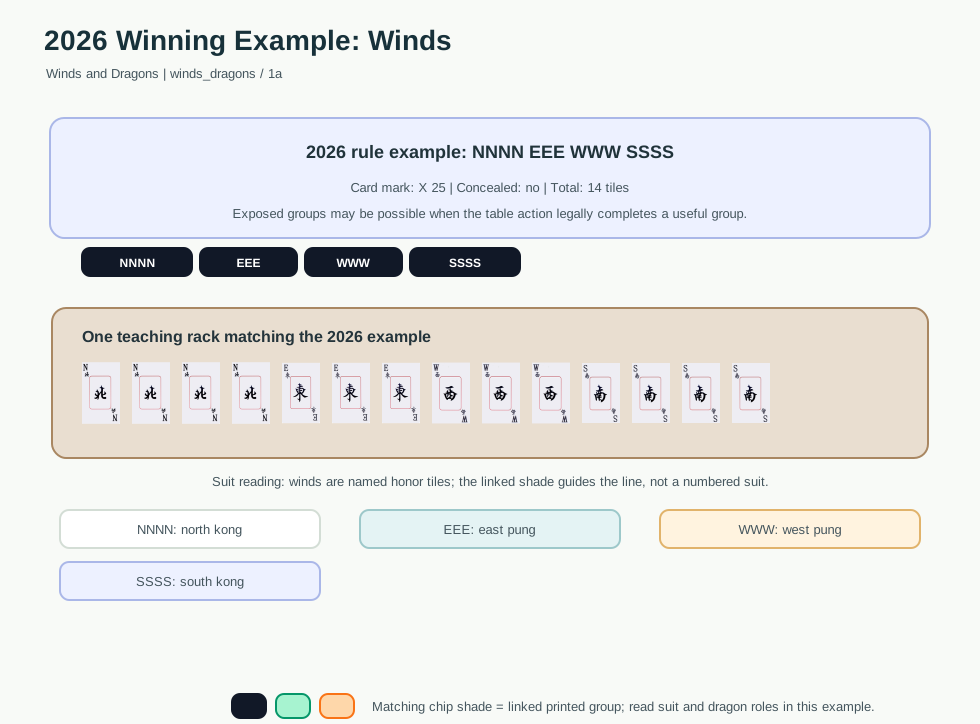
2026 source example winds_dragons / 1a: NNNN EEE WWW SSSS. Card mark: X 25. Concealed: no. Shade/suit reading: the wind groups are named honor tiles; the shared shade guides the line, not a numbered suit.
How does this rack become a winning Mah Jongg result?
Show answer
Answer: The hand wins with wind groups: north kong, east pung, west pung, and south kong.
Named tiles follow the same completion logic as numbered tiles. The tile family changes, but the group-counting habit does not. Because these are winds, the learner should read names and group sizes rather than numbered suits.
Honor tiles can form complete groups.
Kong plus pung plus pung plus kong totals fourteen.
Do not ignore winds when reading a rack.
Shade/suit reading: north, east, west, and south are honor-tile groups.
Example 10: 369 result
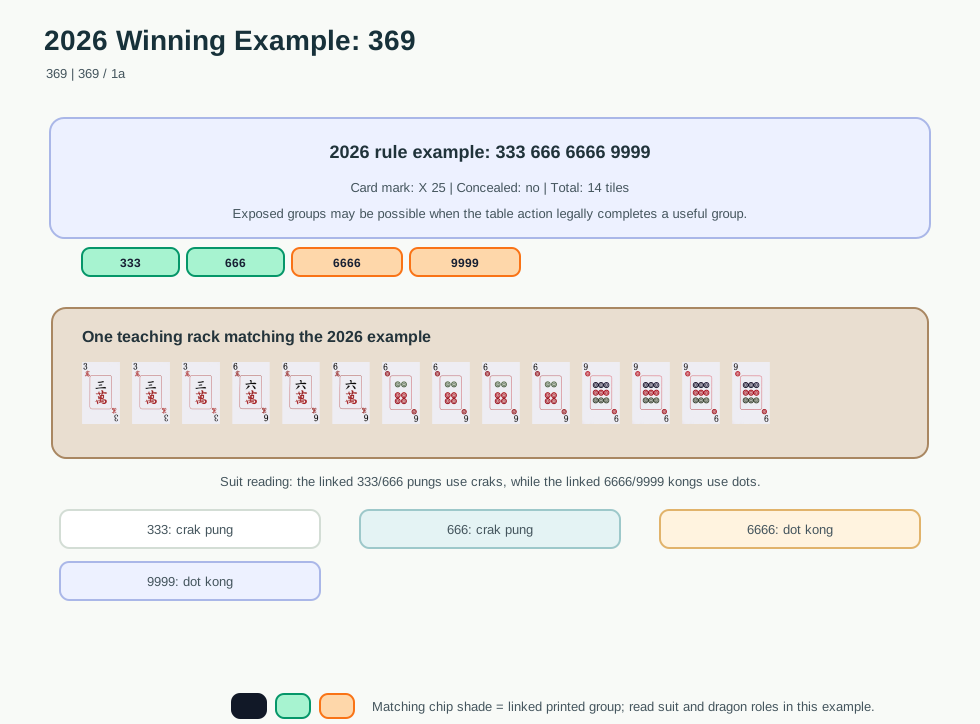
2026 source example 369 / 1a: 333 666 6666 9999. Card mark: X 25. Concealed: no. Shade/suit reading: the linked 333 and 666 pungs use craks, while the linked 6666 and 9999 kongs use dots.
How does this rack become a winning Mah Jongg result?
Show answer
Answer: This wins with two pungs followed by two kongs, all inside the 3-6-9 family.
The repeated six appears in different groups. Each group needs its own complete tile count before the hand is valid. The shaded chips separate the crak pung side from the dot kong side.
2026 winning examples: concealed and special structures
Example 4: concealed 2468 structure
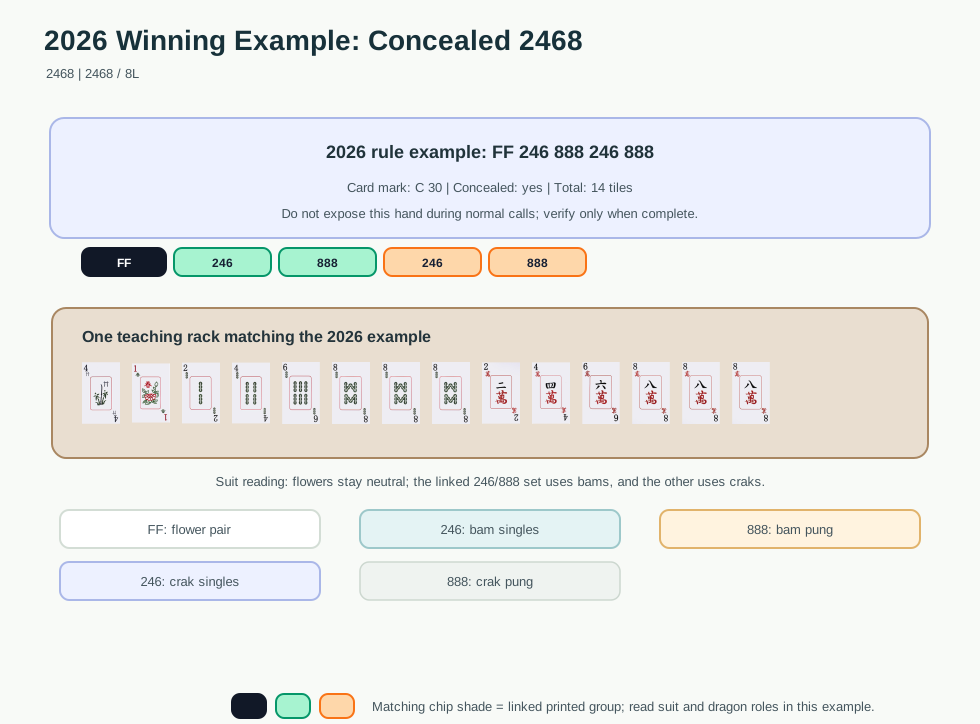
2026 source example 2468 / 8L: FF 246 888 246 888. Card mark: C 30. Concealed: yes. Shade/suit reading: FF is flowers; one linked 246/888 set uses bams and the other uses craks. Shading helps read suits, but the C mark still keeps the hand concealed.
How does this rack become a winning Mah Jongg result?
Show answer
Answer: This result must stay concealed. The rack still totals 14 tiles, but the player should not expose partial groups during ordinary calls.
The C mark changes table behavior. A complete concealed hand may be declared when ready, but exposing part of it too early breaks the result. Shading helps read suit relationships; it does not change concealed handling.
C means concealed.
Concealed status is part of the hand result.
Do not call just because a visible group seems useful.
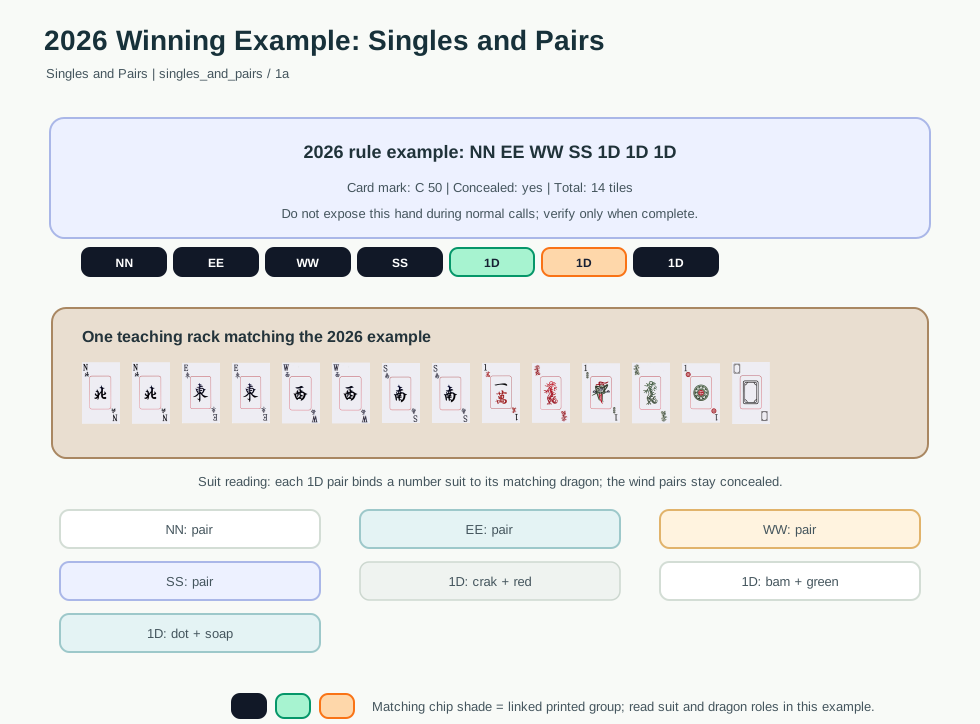
2026 source example singles_and_pairs / 1a: NN EE WW SS 1D 1D 1D. Card mark: C 50. Concealed: yes. Shade/suit reading: the wind pairs are honor tiles; each 1D pair binds a suit to its matching dragon: crak with red dragon, bam with its matching dragon, and dot with soap.
How does this rack become a winning Mah Jongg result?
Show answer
Answer: This wins only when the concealed singles-and-pairs structure is complete.
Pairs may look safe to expose, but concealed singles-and-pairs results rely on staying hidden until declaration. Count the wind pairs and the three 1D groups together, then verify each number-and-dragon pair.
Singles-and-pairs hands are delicate.
Concealed status matters.
Pairs are not automatically callable.
Shade/suit reading: wind pairs first, then crak/dragon, bam/dragon, and dot/soap pairs.
Example 12: concealed 2026 result
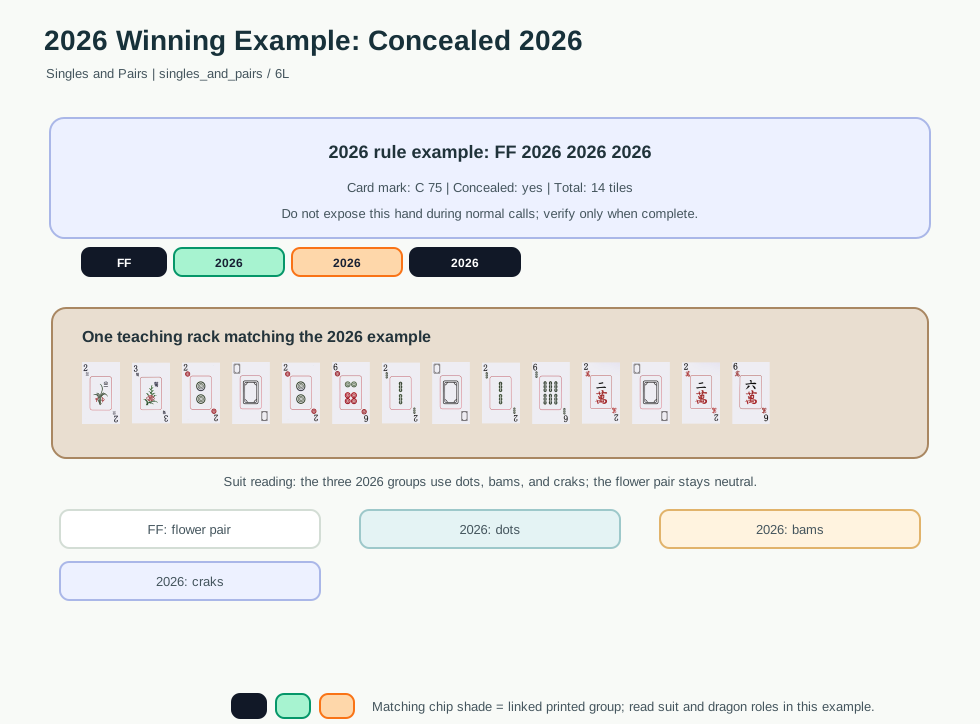
2026 source example singles_and_pairs / 6L: FF 2026 2026 2026. Card mark: C 75. Concealed: yes. Shade/suit reading: the three 2026 groups use dots, bams, and craks; the flower pair stays neutral. Concealed status remains separate from shade.
How does this rack become a winning Mah Jongg result?
Show answer
Answer: This wins as a concealed hand with a flower pair plus three 2026 groups.
The count is 2 + 4 + 4 + 4. The high-value-looking result is still judged first by completion and concealed status, not by excitement. The shaded chips guide the three year groups without changing the C mark.
Count before declaring.
Three 2026 groups plus flowers total fourteen.
C means keep the hand concealed.
Shade/suit reading: flowers plus dot, bam, and crak year groups.
Declaration checklist before saying Mah Jongg
First, choose exactly one card example. A rack cannot win by borrowing half of one example and half of another unless the current card explicitly creates that full structure.
Second, count the groups. Pair is 2, Pung is 3, Kong is 4, Quint is 5, Sextet is 6, and a year group such as 2026 contributes four tiles. The final total should be 14.
Third, check table visibility. If the result is concealed, do not expose ordinary groups during play. If it is exposed-friendly, a call still needs to complete a legal useful group, not just pick up an attractive discard.
Fourth, verify the exact tiles. A group with the right size but wrong number, wrong wind, wrong dragon, or wrong suit relationship is not the same result.
Finally, declare only when the rack is complete. Scoring and settlement come after the hand is accepted, not before.
Practice: choose the winning logic
Practice Case
For 222 000 2222 6666, which group pattern makes the result complete?
Practice Case
For 11 222 33 444 5555, what is the safest first check before declaring?
Practice Case
A 2026 example is marked C. What does that change about ordinary calls?
Practice Case
Why does a quint example often show joker support?
Practice Case
Which statement is true for singles-and-pairs examples marked C?
Practice Case
A rack has the right theme but one group is missing a tile. Should the player declare Mah Jongg?
Practice Case
In 222 000 2222 6666, the final two chunks share the same shade. What should a learner do with that information?
Practice Case
A 2026 example is marked C and also has multiple shaded groups. Which rule should control exposure decisions?
Common Mistakes
Mistake: thinking the goal is to collect attractive tiles. Repair: match one valid 14-tile card result.
Mistake: counting only the theme and not the group sizes. Repair: add Pair, Pung, Kong, Quint, Sextet, and Single counts.
Mistake: declaring with 13 tiles because the rack feels close. Repair: count to 14 and verify every group.
Mistake: exposing a concealed hand. Repair: check the C mark before calling or showing tiles.
Mistake: treating score as the first question. Repair: completion and legality come before settlement.
Mistake: treating card shading as decoration. Repair: use matching shade markers to check suit or dragon relationships in the example.