A complete beginner walkthrough from walls and East through Charleston, draw, discard, call, exposure, concealed hands, and Mah Jongg.
beginner45 minvideodiagramexercisecaseglossary
Learning Objectives
Follow a full American Mahjong hand from wall setup to Mah Jongg or wall game.
Explain Pair, Pung, Kong, Quint, Sextet, Exposure, Concealed, Call, Charleston, and Mah Jongg in table language.
Use two concrete 2026 card examples to see how a card line becomes a 14-tile winning hand.
Know what East, draw, discard, call, expose, and after-call discard mean during live play.
Practice special situations including concealed hands, missed calls, exposed groups, and verification before declaring Mah Jongg.
The whole table at a glance
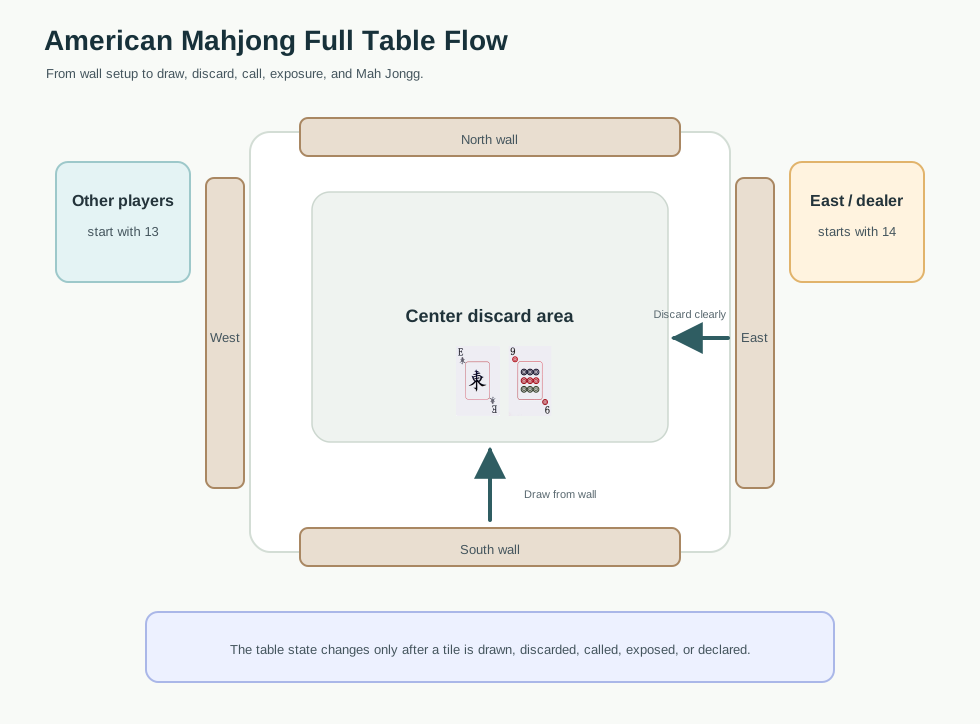
Use this map before a first live hand: find East, each wall, the discard center, and where a called tile will become an exposure.Beginner video support for the live-play part of the hand: gameplay, turns, draw, discard, and call rhythm.
American Mahjong is not one single action. A hand begins with setup: tiles are mixed, walls are built, East is selected, tiles are dealt, and players sort their racks. Only after the opening exchange does the table enter the live draw-and-discard rhythm.
The winning goal is simple to say but detailed to execute: your 14 tiles must match a legal hand on the current card. A card line tells you the shapes and exact tile idea; the table flow tells you how tiles can legally enter or leave your rack.
Basic hand shapes you must recognize
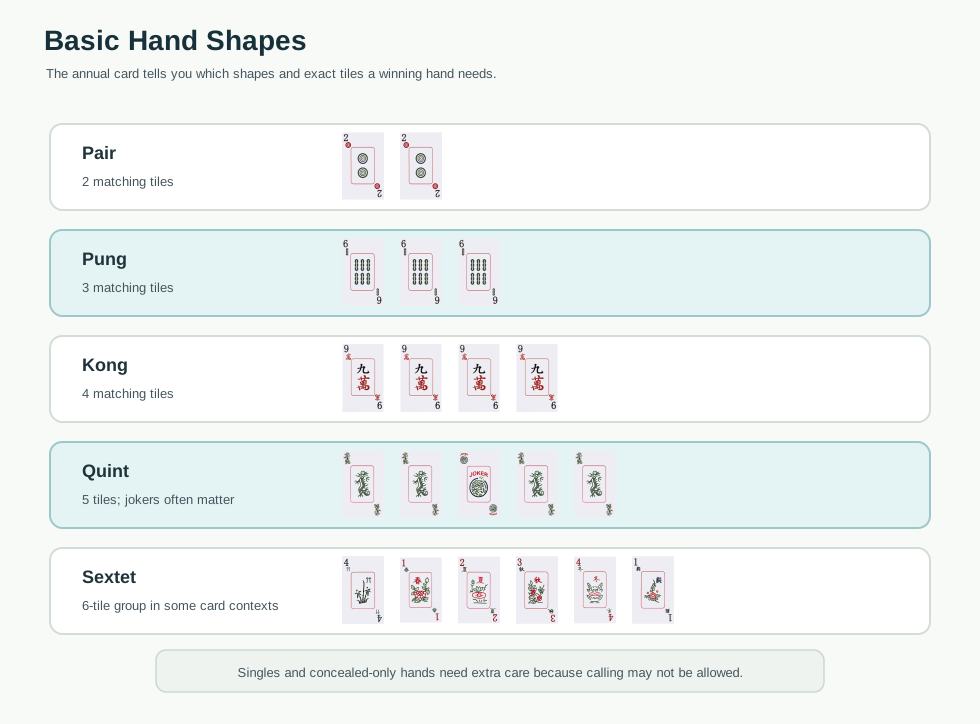
Shape recognition is the bridge from loose tiles to a real card hand.
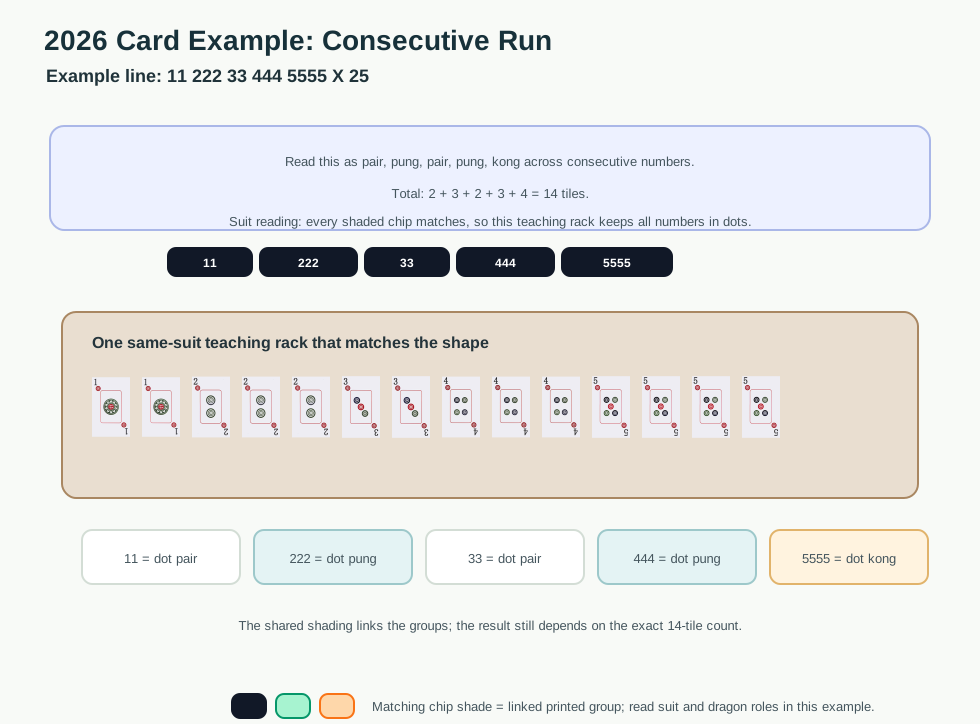
A useful beginner check is arithmetic. A complete American Mahjong hand normally has 14 tiles. When a card example says 11 222 33 444 5555, count 2 + 3 + 2 + 3 + 4. The total is 14, so the line describes a complete winning structure.
The words Pair, Pung, and Kong are not decorative vocabulary. They tell you whether you can call a discard, whether an exposure is possible, whether a joker can help, and whether the rack is actually complete.
Two 2026 card examples: how a line becomes a hand
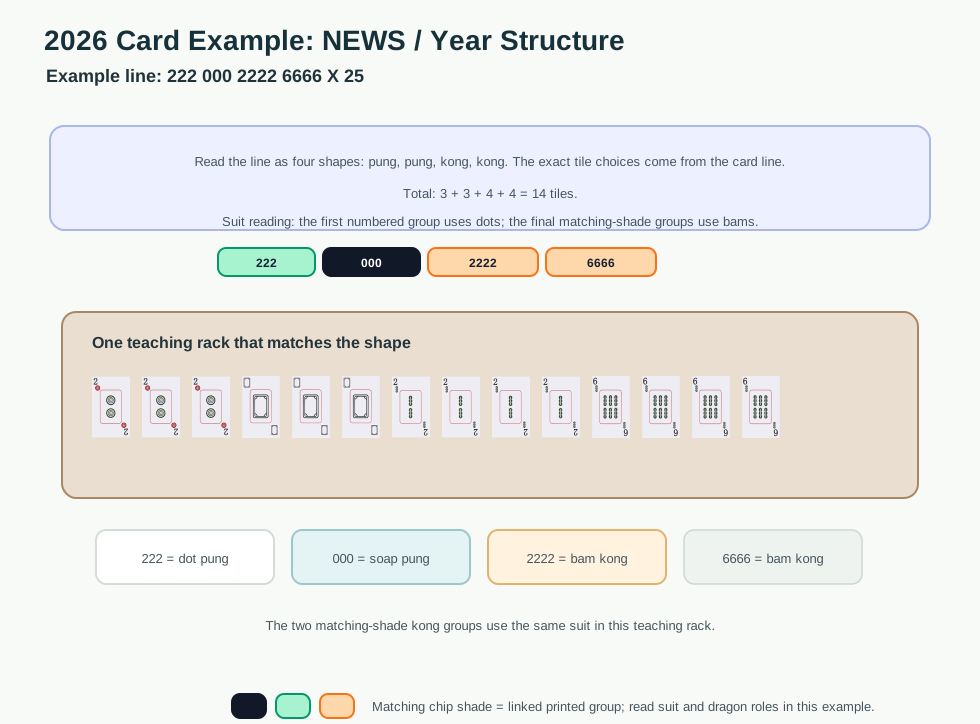
Example 1 reads as Pung, Pung, Kong, Kong: 3 + 3 + 4 + 4 = 14 tiles. The first 222 is dots, 000 is soaps, and the final matching-shade kongs use bams.
Shading is part of reading the card line. Matching shade markers help identify which groups stay logically connected for suit or dragon choices, but the player still must count to 14 and verify legal tile choices.
Case: reading the NEWS / year example
A learner sees 222 000 2222 6666 on the 2026 card and thinks it is just a string of numbers.
How should they break it into hand shapes?
Show answer
Answer: Read it as four groups: 222 is a Pung, 000 is a Pung, 2222 is a Kong, and 6666 is a Kong.
Breaking the line into shapes turns the card from a code into table action. The learner can now ask which tiles are needed, which chunks share a shaded suit relationship, and whether a call would complete a useful group.
Count the group sizes before thinking about strategy.
3 + 3 + 4 + 4 gives the full 14-tile structure.
The first 222 is dots, 000 is soaps, and the final matching-shade kongs use bams.
X indicates the hand can involve exposures when the completed group and table rules allow it.
Example 2 reads as Pair, Pung, Pair, Pung, Kong: 2 + 3 + 2 + 3 + 4 = 14 tiles. All chips share one shade, so this teaching rack keeps the run in dots.
When every chip shares the same shade, as in the consecutive-run example, the learner should keep the related number groups in one suit for that example. The hand is still judged by exact group sizes and legal tile choices.
Case: reading the consecutive run example
A learner has several same-suit number tiles and wants to know why 11 222 33 444 5555 is a complete pattern rather than a random run.
What makes the example complete?
Show answer
Answer: It has five groups with exact sizes: pair, pung, pair, pung, and kong. Those groups total 14 tiles.
American Mahjong is not Chinese-style sequence matching. The run is defined by the card line, its group sizes, and its shaded suit relationship, so the learner must match the specified shapes.
A run on the card is not the same as making chows.
Pairs are smaller and usually harder to repair with jokers.
All chips share one shade, so this teaching rack keeps the run in dots.
The exact section and line guide which numbers, suits, or colors are legal.
From walls to Charleston
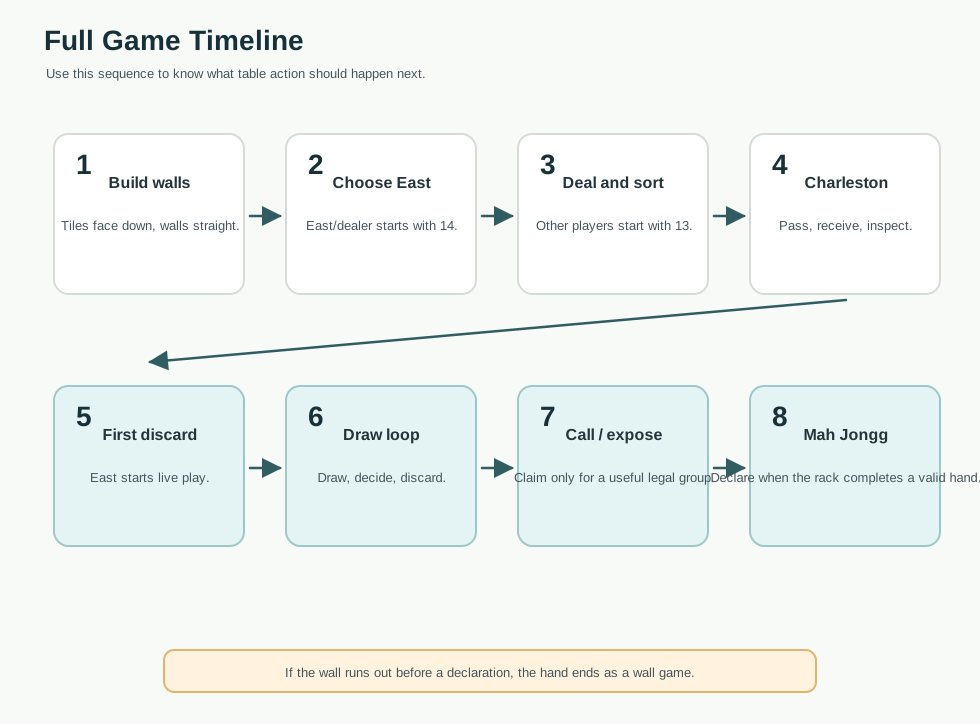
Use the timeline to answer the beginner question: what happens next?
First, players build the walls. Then the table selects East. East is the dealer for the hand and begins with 14 tiles after the deal; the other players begin with 13. Everyone sorts quietly so they can see suits, honors, flowers, jokers, possible pairs, and loose tiles.
Next comes the Charleston. In beginner terms, Charleston is the organized opening pass: choose three tiles, pass them in the table direction for that step, receive three, and inspect again. Do not choose the next pass until the new tiles are actually on your rack.
After the required Charleston passes, many tables use a courtesy pass across. Agree on the number before tiles move. A courtesy pass can be zero, one, two, or three tiles depending on the table agreement and the players involved.
Case: choosing before receiving
A beginner chooses the next three pass tiles before receiving the current pass because they want to play faster.
What should the table teach instead?
Show answer
Answer: Teach the loop: choose, pass, receive, inspect, then choose again.
The incoming tiles may change pairs, groups, and backup directions. Choosing before receiving ignores new evidence.
The Charleston changes the rack repeatedly.
Inspection is part of the pass sequence.
Speed comes after reliable order.
The live turn loop: draw, discard, call, expose
A normal turn starts by drawing from the wall unless the player legally claims the previous discard. After receiving a tile, the player decides whether the rack improved, whether Mah Jongg is complete, and which tile should be discarded if the hand is not complete.
A discard should be named clearly and placed in the discard area. The table should have a brief chance to call. If nobody calls, the next player draws from the wall and the loop continues.
A call is a claim on the most recent discard. In ordinary beginner play, a player calls when that tile completes a legal exposed group such as a Pung or Kong, or when it completes Mah Jongg. After a call for exposure, the player takes the discard, puts the completed group face up, then discards one tile from the rack.
Case: call without a group
A learner calls a discarded 6 Bam because they have one 6 Bam in the rack and like the tile.
Is that enough reason to call?
Show answer
Answer: No. The call should complete a useful legal group or Mah Jongg, not simply add a tile that looks attractive.
Calling exposes information and changes turn order. The benefit must be clear enough to justify the public cost.
A call is a table operation, not a wish list.
Exposure gives information to opponents.
After a call and exposure, the caller discards from the rack.
Case: exposure order
A learner says call, takes the discard, but then immediately discards before the exposed group is visible.
What is the correct sequence?
Show answer
Answer: Call, take the discard, expose the completed group neatly, then discard one tile from the rack.
The table needs to see what public information changed before the next discard enters play.
Expose before discarding after a call.
Keep exposed tiles readable.
One discard ends the caller's turn.
Special situations beginners must recognize
Concealed hands change call decisions. If a card line is concealed, calling a discard to expose a Pung or Kong can make the hand invalid. A beginner should check the C/X marker and table rules before calling for exposure.
Jokers can help grouped shapes such as Pungs, Kongs, Quints, or other allowed groups, but they do not solve every problem. Pairs need special caution. If the missing tile is part of a Pair, ask before assuming a joker can replace it.
A wall game happens when the tiles run out and nobody has declared Mah Jongg. The hand ends, players reset, and the next hand begins according to the table method. Do not keep drawing past the wall just to finish a teaching example.
Mah Jongg declaration is the end-state check. The player says Mah Jongg when the rack matches a valid hand. The table verifies the line, shape count, exposure status, joker use, and value or settlement method.
Case: concealed line temptation
A learner is working toward a concealed line and sees a discard that would complete a Pung if exposed.
What should they check before calling?
Show answer
Answer: They should check whether the line is concealed and whether calling for exposure would invalidate the hand.
Concealed status changes the legal operation. The best-looking call can be the wrong action if it breaks the hand requirement.
C means concealed-only in the card context.
Do not expose a group for a concealed hand.
Calling for Mah Jongg is different from calling for a normal exposure.
Practice the flow
Practice Case
After the deal, East has 14 tiles and other players have 13. What usually happens before live draw-and-discard play begins?
Practice Case
In the 2026 example 11 222 33 444 5555, what are the group shapes?
Practice Case
A player calls a discard for exposure. Which order is correct?
Practice Case
Which situation needs a concealed-hand check before calling for exposure?
Practice Case
What must be true before declaring Mah Jongg?
Common Mistakes
Mistake: thinking the game starts with drawing. Repair: setup, East, deal, and Charleston happen first.
Mistake: calling a discard just because it matches one tile. Repair: call only when it completes a useful legal exposed group or Mah Jongg.
Mistake: exposing tiles before naming the call clearly. Repair: say the call, take the discard, expose neatly, then discard.
Mistake: treating concealed hands like exposed hands. Repair: check whether the card line is concealed before calling any discard for exposure.
Mistake: declaring Mah Jongg because the rack feels close. Repair: count the shapes and verify the exact card line first.