The habits that slow new players down and the exact repair moves to practice at the table.
beginner30 mindiagramexercisecaseglossary
Learning Objectives
Spot the beginner habits that slow learning.
Replace rushed decisions with simple table checks.
Match each common mistake to a specific repair action.
Use neutral table language when a mistake needs a pause or reset.
Repair discard, call, joker, Charleston, and card-study errors without revealing protected annual-card details.
Turn a mistake into one practice focus for the next hand.
Mistakes are repair signals
Use simple labels to slow down the most common beginner loop: reacting before checking the whole rack.
The strongest repair habit is specific: I rushed a pass, so next hand I will pass, receive, inspect. I discarded instantly, so next turn I will scan my rack, recent discards, and visible exposures. A named repair is easier to practice than a vague promise to be careful.
Use mistakes as table data, not as proof that the learner is failing. American Mahjong has many moving parts: the rack, Charleston decisions, discards, calls, exposures, jokers, and the official card. Beginners improve fastest when each error becomes one repeatable action.
Use the reset sequence
Use this sequence after a mistake: 1. Stop moving tiles. 2. Let any current call, exposure, or discard resolve. 3. Name the missed check privately or in neutral table language. 4. Rebuild the visible state. 5. Choose one repair action for the next similar moment.
Good table language is procedural: one moment, I am checking visible information, or I need to re-sort before I pass. Avoid long explanations of your private plan. You can repair the habit without telling the table which exact annual-card target you were considering.
Repair the big beginner loops
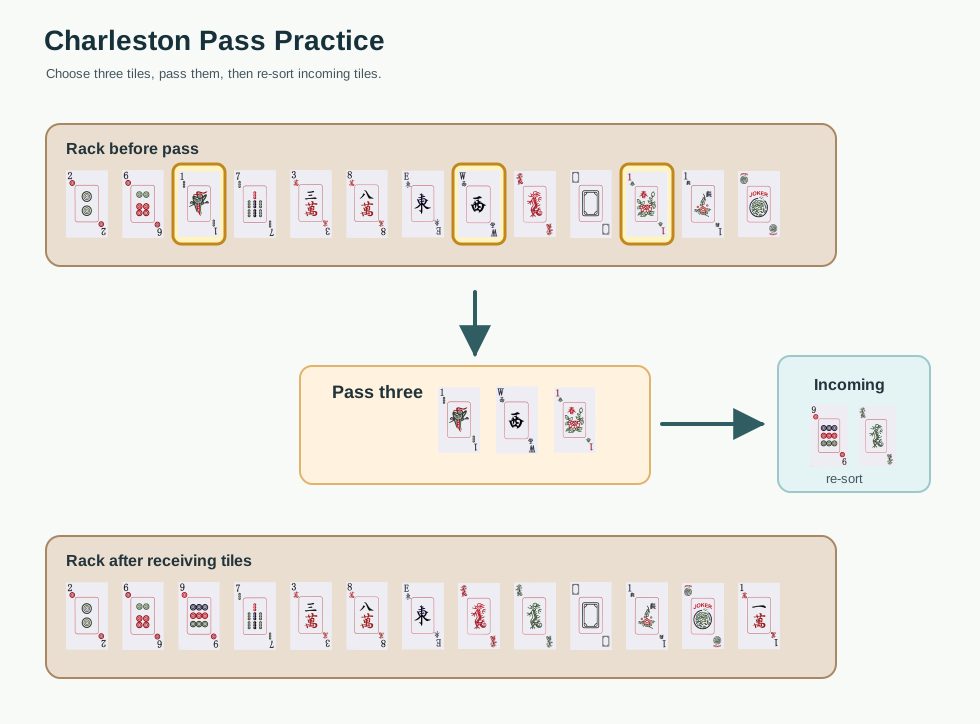
Rushing Charleston passes hurts because the rack changes after each pass. Repair it with pass, receive, inspect: choose from the rack you have now, then re-sort before the next pass.
Instant discards hurt because they skip public information. Repair them with a short scan: my rack, recent discards, visible exposures, then the tile I want to release.
Overcalling hurts because it reveals information without enough progress. Repair it by naming the group or plan the call completes before you speak.
Joker assumptions hurt because jokers are flexible only in the right context. Repair them by checking the group type and asking for official or table confirmation on edge cases.
Ignoring exposures hurts because the table is already giving clues. Repair it by looking at visible groups before choosing a risky discard.
Strategy mistakes need the right follow-up lesson. If the mistake is choosing from a weak rack clue, review hand direction. If it is changing plans after every draw, review switching direction. If it is naming a discard before checking the table, review safe discard habits. Then use the practice routine to drill only one repair at a time.
Unsafe card notes hurt because they turn a learning page into a substitute for protected material. Repair them by writing public notes about method only: scan, shortlist, compare to rack evidence, and check exact details on the learner's own official card.
Case: rushed Charleston pass
A learner receives a pass, immediately pushes three tiles forward, then realizes one of the new tiles changed their rack shape.
What repair habit should they use on the next pass?
Show answer
Answer: Use pass, receive, inspect before choosing the next pass.
The rack changes after each pass. Inspecting the new rack prevents the learner from passing based on outdated evidence.
Do not choose the next pass from the previous rack.
Receive before deciding.
A small pause is part of clean table flow.
Case: instant discard
A learner draws, sees one loose tile, and names it before checking the latest exposure across the table.
What should happen before the tile is named?
Show answer
Answer: Run the rack, discard, and exposure scan, then decide whether that loose tile is still the best release.
A tile can be weak for your rack and still useful to the table. The visible scan is the repair.
Weak for me is not the same as lower risk.
Scan before speaking.
Exposures can change discard priority.
Special cases and source-safe repairs
If you call too often, pause before the next call and ask: what exposed group does this complete, what information will I reveal, and is this progress worth the exposure? That question teaches the cost of calling without requiring a protected annual-card example.
If you mishandle joker thinking, return to the basics: identify whether a joker is relevant to the group type, notice exposed jokers calmly, and ask official or table-agreed rules for timing questions. Do not invent edge-case rules from memory.
If card study causes confusion, separate private study from public notes. Exact hand targets, official shorthand, scores, and section layouts stay on the official card or approved private material. Public lessons can teach the workflow without reconstructing the card.
Case: the tempting call
A discard looks interesting, but calling it would expose information while only slightly improving the learner's plan.
What repair question should they ask before calling?
Show answer
Answer: Ask whether the call completes a useful group and whether the progress is worth the information cost.
The repair for overcalling is not never call. It is making the call earn its exposure cost.
Calls reveal information.
A useful call should create real progress.
Interesting is not enough by itself.
Case: public note copies too much
A learner writes a public study note that includes exact annual-card targets, shorthand, and values so they can remember what went wrong.
What should the public note say instead?
Show answer
Answer: Use method language only: I should shortlist privately, compare to rack evidence, and check exact details on my official card.
The repair preserves learning value without publishing protected annual-card structure.
Public notes can teach method.
Exact card content belongs with the official source.
Mistake reviews do not need protected examples.
Practice cases with answers
Practice Case
You draw a tile that starts a brand-new idea, but your current rack already has a pair and a small cluster. What is the best beginner habit?
Practice Case
What should a learner scan before making a discard?
Case: breaking the best evidence
During a practice pass, a learner breaks a useful pair because a new single tile feels more exciting.
What should they do differently next time?
Show answer
Answer: Protect the stronger rack evidence and pass a more unsupported tile instead.
Pairs and connected groups are often better anchors than a single new possibility.
Do not let novelty outweigh structure.
Name the evidence before changing direction.
Practice Case
Which repair best matches the mistake “I call every tile that looks interesting”?
Practice Case
A learner discards the first isolated tile they see without checking exposures. Which repair fits?
Practice Case
After a Charleston pass, what should a learner do before choosing the next pass?
Practice Case
Which phrase is best when a learner needs a moment before discarding?
Practice Case
Which public note is source-safe after a card-reading mistake?
Case: joker assumption
A learner says a joker can fix any problem in their rack and stops checking what group type they are building.
What repair should they practice?
Show answer
Answer: Check the group type and use official or table-agreed rules for uncertain joker situations.
Jokers are flexible, but not a substitute for understanding the structure and timing of the play.
Joker thinking still needs context.
Uncertain edge cases should be checked, not guessed.
Public examples can stay generic.
Case: trying to repair everything
After a rough hand, a learner lists six things they did wrong and feels overwhelmed.
What should they choose for the next hand?
Show answer
Answer: Choose one repair focus, such as discard scan or pass order, and practice only that habit next.
One repeatable repair is more useful than trying to fix every weakness at once.
Limit the repair scope.
Practice one habit at a time.
Use the next hand as a focused drill.
Common Mistakes
Mistake: rushing Charleston passes. Repair: pass, receive, inspect, then choose the next pass.
Mistake: discarding instantly. Repair: run the same rack/discard/exposure scan before speaking.
Mistake: overcalling. Repair: name the useful exposed group and information cost before calling.
Mistake: treating jokers as universal. Repair: check the group type first.
Mistake: ignoring exposures. Repair: look at visible groups before choosing a discard.
Mistake: trying to fix every weakness at once. Repair: choose one table habit for the next hand.
Mistake: copying annual-card details into public notes. Repair: keep exact targets on the official card and publish only generic study process.