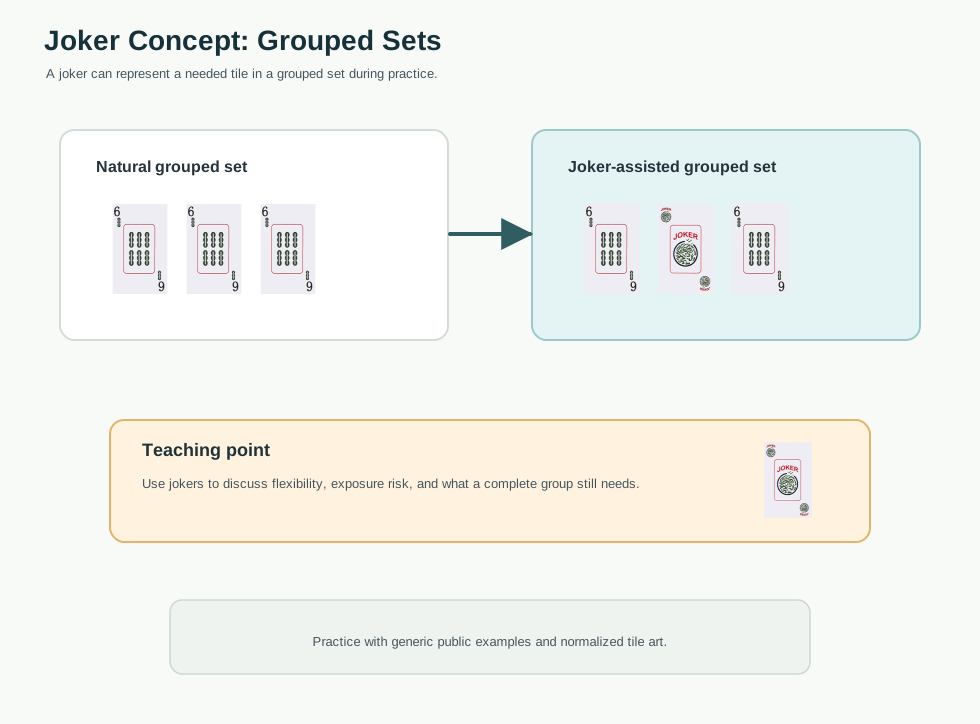
How beginners can start noticing exposed jokers without overcomplicating play.
returning28 mindiagramexercisecaseglossary
Learning Objectives
Notice exposed jokers as part of table awareness.
Ask whether a natural tile creates an exchange opportunity.
Keep joker awareness calm instead of chasing every visible joker.
State when beginner exchange awareness should become a table or official-review question.
Use a step-by-step exchange-awareness sequence before acting.
Repair rushed exchange attempts without revealing protected annual-card details.
Make jokers visible in your thinking
This generic joker visual teaches awareness only. It does not show or imply an official annual-card hand.
The first skill is simply seeing the joker. When another player exposes a group with a joker, mark it mentally as public information. You do not need to act right away; just connect the joker to the natural tile it appears to stand beside.
Use the awareness sentence: I see the exposed joker, I can name the natural tile idea, and I will wait for the right timing before acting. That sentence keeps the learner from chasing every visible joker.
Keep the lesson public-safe. Do not explain joker exchange awareness with exact annual-card lines, score values, protected notation, or hand layouts. Generic exposed groups are enough to teach the observation habit.
Use the exchange-awareness sequence
A useful beginner script is: I see an exposed joker, I know which natural tile would matter, and I will wait until timing and table rules make the exchange relevant. That keeps joker exchange awareness from becoming a distraction.
Keep this lesson in the awareness lane. It teaches learners to notice exposed jokers, name the natural tile beside them, and ask a rules-safe timing question before acting. It is not a complete reference for every joker exchange edge case.
Use this sequence before acting: 1. Scan exposures. 2. Identify any exposed joker. 3. Name the natural tile concept without naming a protected annual-card target. 4. Check whether the timing is currently valid under table rules. 5. Confirm the table state if unsure. 6. Act only when the timing and source are clear.
Act only when timing is clear
A calm table script is: I see the exposed joker, I have the relevant natural tile, I believe the timing is correct, and I am confirming the exchange before moving tiles. If any part is uncertain, stop and ask the teacher, host, or official/table-agreed rule.
Do not reach into an exposure while the table is still resolving a discard, call, or timing question. Motion creates confusion. Clear words first, table confirmation second, tile movement last.
Case: reaching too soon
A player notices an exposed joker and starts reaching toward another player's exposure before confirming timing or table agreement.
What is the repair?
Show answer
Answer: Stop the reach, state the observation, and confirm timing with the table before any tiles move.
Joker exchange awareness is not a grab. The table needs a clear public sequence so no hidden or visible information is disturbed incorrectly.
Words before movement.
Timing must be clear.
Use table or official confirmation for edge cases.
Case: right observation, wrong moment
A returning player correctly identifies a natural tile concept connected to an exposed joker, but the table is in the middle of resolving another discard.
What should they do?
Show answer
Answer: Hold the thought, let the current table action resolve, then ask about timing if the opportunity still seems relevant.
Accurate observation does not override turn flow. Joker exchange awareness should support clean table rhythm.
Observation and action are separate steps.
Do not interrupt unresolved table actions.
Clean timing prevents disputes.
Repair rushed or missed exchanges
If you missed an exposed joker, add a pre-discard exposure scan. If you noticed the joker but were unsure what natural tile mattered, practice naming the natural-tile concept generically. If timing was unclear, ask the table before moving tiles next time.
If an exchange happens at the table, update your visible-information scan. The exposure changed. Your next discard and call decisions should account for the new public information, but you still should not announce protected annual-card targets.
Case: exchange changes discard caution
Another player completes a valid table-agreed exchange involving an exposed joker. The exposure now shows a different natural tile arrangement than before.
What should a returning beginner update?
Show answer
Answer: Update the visible-information scan before the next discard.
The exchange changed public information. The learner should notice the new exposure without trying to reconstruct a protected annual-card hand.
Exchanges change public information.
Update discard caution after visible changes.
Do not infer or publish full protected hand details.
Practice cases with answers
Practice Case
You notice an exposed joker in another player's group. What should you do first?
Practice Case
Which statement keeps joker exchange practice beginner-safe?
Case: seeing the joker too late
A returning player finishes their turn, then realizes another exposure had a joker that might have changed how cautious their discard should have been.
What repair habit should they build?
Show answer
Answer: Add a quick exposure scan before naming a discard.
Scanning visible groups before discarding helps the player notice jokers while there is still time to use that information.
Noticing is the first milestone.
Timing and table agreement still matter.
Joker awareness should support, not replace, rack reading.
Case: natural tile spotted before acting
A player exposes a generic group that includes a joker. On your next look across the table, you can name the natural tile that the joker appears to stand beside, but you are unsure whether the timing is right to act.
What should a returning beginner do before trying anything with that joker?
Show answer
Answer: Notice the natural tile, keep playing calmly, and ask a table or official-review question before acting on timing you are unsure about.
The beginner skill is accurate observation plus rules-safe caution. The lesson should not turn every visible joker into an automatic action or an unreviewed edge-case ruling.
Name the natural tile before thinking about action.
Do not chase every exposed joker.
Route uncertain timing to table agreement or official review.
Practice Case
Which sequence is safest before acting on an exposed joker?
Practice Case
A player is unsure whether the timing is valid for an exchange. What should happen?
Practice Case
After another player completes an exchange, what should you update?
Case: annual-card details stay private
A learner wants to explain an exchange by naming the exact annual-card target and protected pattern they are pursuing.
What should the public lesson ask them to do instead?
Show answer
Answer: Explain only the generic exposed joker, natural-tile concept, and timing question.
The exchange habit can be taught without publishing protected annual-card structure. Exact targets belong on the learner's own official card or table-agreed source.
Keep public examples generic.
Do not publish protected hand structure.
Source exact details to the official card or table rule.
Common Mistakes
Mistake: watching only your own rack after exposures appear. Repair: add one exposure scan before discarding.
Mistake: assuming every joker situation should be acted on immediately. Repair: separate noticing from acting.
Mistake: forgetting table agreement and timing. Repair: confirm local rules before using an exchange habit in live play.
Mistake: naming a protected annual-card target to justify an exchange. Repair: discuss only the public exposed joker and natural-tile concept.
Mistake: reaching toward another player's exposure before confirming the moment is valid. Repair: stop motion and ask the table rule first.
Mistake: ignoring the new information after an exchange happens. Repair: update discard caution and exposure awareness.