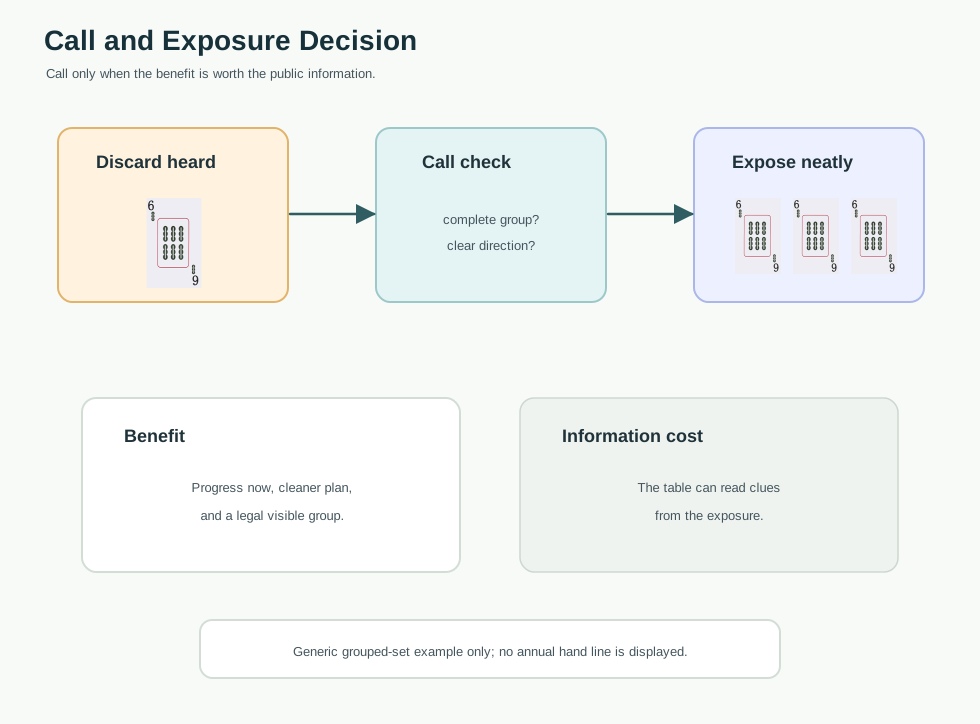
How calls and exposures change table flow, reveal information, and create repairable beginner decisions.
beginner28 mindiagramexercisecaseglossary
Learning Objectives
Understand what calling a discard changes about the hand.
Balance progress with the information revealed by an exposure.
Use a call/no-call checklist before speaking.
Place exposures neatly so the table can read public information.
Repair call timing and messy-exposure mistakes without revealing private plans.
Explain why passing on a tempting discard can be correct.
Calling changes the table
Call decisions weigh progress against the information the table will gain.
A call is not just taking a tile. It pauses normal draw flow, creates public information, and usually requires the caller to expose a group neatly before finishing the turn with a discard from the rack.
Keep public practice generic. Do not explain calls by naming exact annual-card targets, official shorthand, values, or protected hand structures. The lesson can teach timing, table action, information cost, and visible-group handling without becoming a card pattern drill.
Use the call/no-call sequence
Do not call only because a tile looks useful. A beginner call should complete a clear exposed group, support a real direction, and be placed neatly so the whole table can read it.
Use a four-question call/no-call checklist: is the claim allowed for the table action being considered, does it complete or strongly advance a useful visible group, does it support the direction your rack already suggests, and is the information cost acceptable? A weak answer to any question is a reason to pass in beginner practice.
Complete the call turn cleanly
Use this table-flow sequence: 1. Hear the discard clearly. 2. Decide quickly but calmly whether the call is valid and useful. 3. Say the call before the next hidden draw changes the table state. 4. Place the exposure neatly. 5. Discard from the rack. 6. Pause so other players can respond.
If timing is unclear, stop motion and clarify the table state. Do not argue by revealing private rack plans. The table needs to know what action is being resolved, not what protected hand target someone was considering.
Case: call timing gets messy
A learner says call as the next player starts reaching for the wall, and nobody is sure whether new hidden information has entered the turn.
What is the repair?
Show answer
Answer: Stop motion and clarify the table state before continuing.
Timing confusion should be repaired before the next hidden draw changes information. The repair is procedural, not a private-hand argument.
Words before motion.
Clarify table state early.
Do not reveal private plans to solve timing.
Case: forgot the discard
A learner calls, exposes neatly, then waits without discarding from the rack.
What should happen next?
Show answer
Answer: They should complete the call turn by discarding from the rack and pausing for calls.
The called discard supplied the claimed tile for the turn. The turn still needs a discard to return the table to normal flow.
Calling does not end the turn.
Expose, discard, pause.
Clear sequence prevents table confusion.
Read exposures as public information
After an exposure appears, every player should update their visible-information scan. The exposure may affect discard caution, call decisions, and joker awareness. It does not reveal the caller's whole rack, and public lessons should not try to reconstruct it.
As the caller, place the exposed group neatly and leave it visible. As an observer, describe it generically: a public exposed group appeared, so my next discard should consider that information. Avoid naming exact protected annual-card targets.
Case: messy exposure
A learner completes a call but leaves the exposed tiles angled, overlapping, and hard for the rest of the table to read.
What repair should they practice?
Show answer
Answer: Square the exposed group neatly and keep it visible before continuing the turn.
Exposures are public information. Clear placement reduces disputes and makes later discard and call decisions easier.
Exposures should be readable.
Neat placement supports table flow.
Public information should stay public.
Case: overreading an exposure
A player sees one exposure and starts announcing the exact protected hand target they think the caller wants.
What is the public-safe correction?
Show answer
Answer: Use generic visible-information language instead of naming protected annual-card targets.
An exposure is a public clue, not permission to publish or reconstruct annual-card structure.
Use generic exposure language.
Do not reconstruct protected card content.
Visible clues still leave hidden information.
Practice cases with answers
Practice Case
A discard would complete an exposed group, but it also reveals your direction. What should a beginner ask first?
Practice Case
After a successful call, how should the exposed tiles be placed?
Case: the tempting call
A learner wants to call every discard that matches something in the rack, even when it does not complete a clear group.
What habit should replace that impulse?
Show answer
Answer: Call only when the discard completes a meaningful exposed group and supports a clear direction.
A loose call can give away information without creating enough progress.
Progress and visibility must be weighed together.
Messy or unnecessary exposures make the hand harder to manage.
Practice Case
After you expose a grouped set, what has changed for the rest of the table?
Practice Case
What is the clean sequence after a successful call?
Practice Case
A timing dispute starts as the next player reaches for the wall. What should the table do?
Practice Case
Which statement about exposures is safest for public practice?
Case: not calling is correct
A discard matches a loose tile in your rack, but it does not complete a clear exposed group and would reveal a direction you may abandon.
What is the stronger beginner decision?
Show answer
Answer: Pass on the discard and keep the rack flexible.
The call offers little progress and a large information cost. Passing protects flexibility.
A match is not automatically a call.
Information cost matters.
Beginner practice should reward disciplined passes.
Common Mistakes
Mistake: calling only because a tile is useful. Repair: require a clear exposed-group benefit.
Mistake: leaving exposed tiles messy or hard to read. Repair: place them neatly and visibly before continuing.
Mistake: speaking too late after the next action has started. Repair: stop motion and clarify the table state before new hidden information enters.
Mistake: calling to chase a weak direction. Repair: compare progress against information cost.
Mistake: explaining the call by naming protected annual-card targets. Repair: discuss only the public group, table action, and generic direction.
Mistake: forgetting to discard after exposing. Repair: complete the call turn with a rack discard and pause for calls.