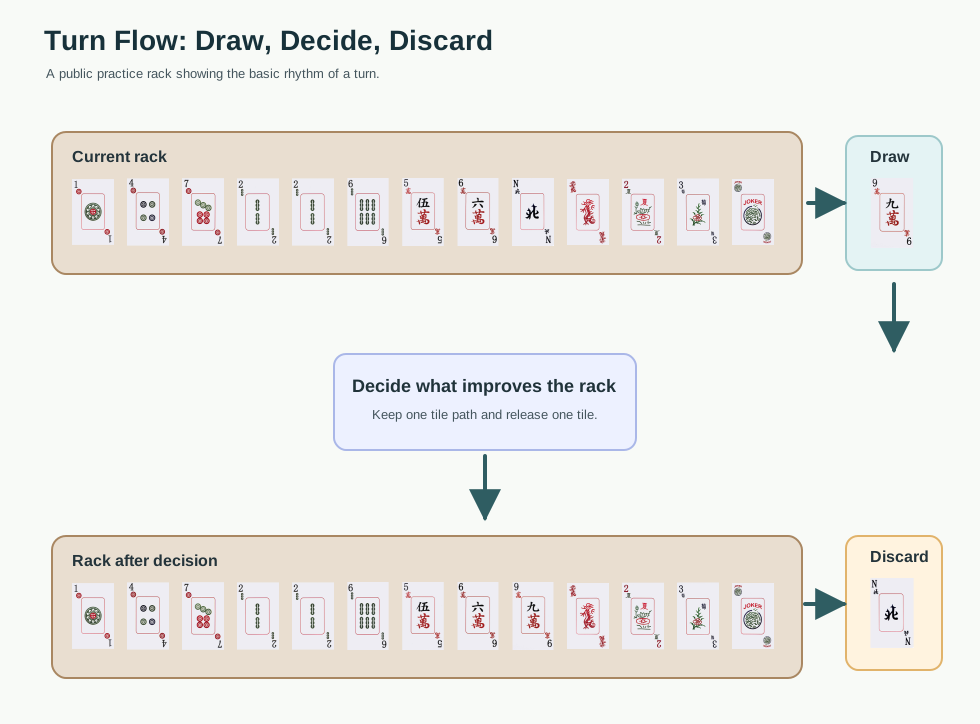
When claiming a discard helps, and what it reveals to the table.
beginner28 mindiagramexercisecaseglossary
Learning Objectives
Evaluate whether a discard claim advances a clear plan.
Understand that calling reveals information.
Use a short call check before exposing tiles.
Run the table sequence for a claimed discard without drawing from the wall.
Recognize common timing repairs for late, unclear, or competing calls.
Ask for official or table-agreed rules when a call timing edge case is unclear.
Call with a reason
A call starts with another player's discard and ends with information the whole table can see.
Use a three-part call check: does the discard complete something meaningful, does it support the direction already in your rack, and are you comfortable showing that information now? If one answer is weak, passing is often the calmer beginner choice.
A live-table call script is: hear the discard, decide whether it completes a useful exposed group or other valid table action, say the call clearly, place the exposure neatly, then finish your turn with a discard so the table rhythm can continue. Practicing that order prevents a rushed call from becoming a rules dispute.
Keep exact annual-card targets out of public practice. Use the learner's own official card or table-agreed source to confirm whether a specific call is legal; this lesson teaches the timing, benefit, and information-cost habit.
Run the claimed-discard turn
Use this sequence: 1. Hear and identify the discard. 2. Confirm it completes a valid exposed action or Mah Jongg claim under the table's rules. 3. Say the call clearly before play moves on. 4. Bring the claimed tile into the visible exposure. 5. Check the remaining rack once. 6. Discard clearly and pause for calls.
Do not draw from the wall after a successful call. The claimed discard supplied the tile for this turn. The next public decision is your discard, followed by the same call pause every player expects.
Case: called and then reached for the wall
A learner calls a discard, arranges an exposure, and then starts reaching toward the wall as if beginning a normal draw turn.
What is the clean repair?
Show answer
Answer: Stop the reach, keep the exposure visible, choose a discard from the rack, and pause for calls.
The claimed discard is the tile for this turn. Drawing as well would add hidden information and break the table sequence.
A successful call replaces the draw step.
Expose before discarding.
Finish with a clear discard and call pause.
Case: exposure not settled
A player calls, pulls the discarded tile toward the rack, and starts choosing a discard before the exposure is visible.
What should happen before the discard?
Show answer
Answer: Settle the exposure face up where the table can see it, then choose and name the discard.
The exposure is part of the public information cost. The table needs to see what changed before the next discard is evaluated.
Do not hide a claimed tile in the rack.
Visible information should be clear before the next discard.
Neat exposure layout reduces confusion.
Information has a cost
Calling is not only a way to gain a tile. It also turns part of your hand into public information. That can help opponents choose discards, track your direction, or notice joker exchange possibilities later.
A good call has enough benefit to pay for that information cost. The benefit might be immediate progress, a clearer rack direction, or a valid winning claim. The cost is that everyone now sees part of your structure and can adjust future discards.
Handle timing edge cases calmly
If a call is late, unclear, or arrives as the next player starts to draw, stop the motion immediately. Do not expose more tiles, draw another tile, or debate private rack contents. Clarify what everyone heard and where the turn had reached.
If two players appear to want the same discard, do not invent a rule from memory. At casual tables, ask the teacher or host for the table rule. In organized play, use the applicable official or event rule. The lesson habit is procedural: pause, clarify, decide, then resume.
Case: late call as the next player moves
A discard is named, the next player begins to reach toward the wall, and another player says Call at almost the same moment.
What should beginners do before continuing?
Show answer
Answer: Stop motion and ask the teacher or table rule to confirm whether the call is in time.
The table should resolve timing before new hidden information enters the turn. This keeps the repair procedural instead of strategic.
Stop first; decide second.
Do not draw while timing is unclear.
Use official or table-agreed rules for edge cases.
Case: two voices at once
Two players speak up for the same discard, and the beginner table is unsure how priority should work.
What is the right beginner response?
Show answer
Answer: Pause the table and ask for the official or table-agreed priority rule before anyone moves tiles.
Competing calls are a rule question, not a moment for guessing. The table should resolve it before changing public or hidden information.
Do not race to grab the tile.
Clarify priority before moving tiles.
Keep private rack contents out of the discussion.
Practice cases with answers
Practice Case
A discard matches one tile in your rack, but it does not complete a useful visible group or support your strongest direction. What is the best beginner choice?
Practice Case
What should you name before calling a discard in practice?
Case: the tempting discard
A player discards a tile that could make your rack look more organized, but calling it would expose a direction you are not sure you want.
How should a beginner decide?
Show answer
Answer: Call only if the tile creates clear progress toward the direction your rack already supports.
Uncertain exposure can make the hand easier for opponents to read while giving you only a small benefit.
A useful tile is not always a useful call.
A neat exposure matters after a call.
Passing can be the disciplined choice.
Case: called too early
A learner calls immediately because the discard matches one tile, then realizes it does not complete a meaningful exposed group.
What repair habit should they practice next time?
Show answer
Answer: Pause long enough to name the group or plan the discard completes before calling.
A useful-looking tile is not enough. The call should have a clear role before the rack becomes public.
Name the benefit first.
Avoid impulse calls.
Keep examples generic and card-safe.
Practice Case
Which action sequence keeps a call clear at the table?
Practice Case
After a successful call, what should the caller do instead of drawing from the wall?
Practice Case
A call timing dispute starts while the next player is reaching for the wall. Which repair is best?
Practice Case
Which call has the best beginner reason?
Common Mistakes
Mistake: calling because a tile is interesting rather than useful. Repair: name the group or plan it completes before acting.
Mistake: forgetting that the exposure changes how others read your hand. Repair: say the information cost out loud during practice.
Mistake: calling without checking table pace. Repair: pause, confirm the discard, then expose neatly.
Mistake: drawing from the wall after a successful call. Repair: remember that the claimed discard supplies the tile for this turn.
Mistake: calling and then hiding the reason in the rack. Repair: expose the claimed group clearly before discarding.
Mistake: arguing through a timing dispute while tiles keep moving. Repair: stop motion, ask the teacher or table rule, then resume from the agreed state.