A gentle overview of scoring flow, table agreement, and why exact values stay with official materials.
returning30 mindiagramexercisecaseglossary
Learning Objectives
Separate scoring concepts from exact annual-card values.
Confirm completion before discussing value or payment.
Ask which scoring source and table convention are being used before play.
Use a calm settlement conversation after a win.
Handle table variation, tournament context, and uncertainty without guessing.
Know when to consult official or table-specific scoring materials.
Scoring starts after completion
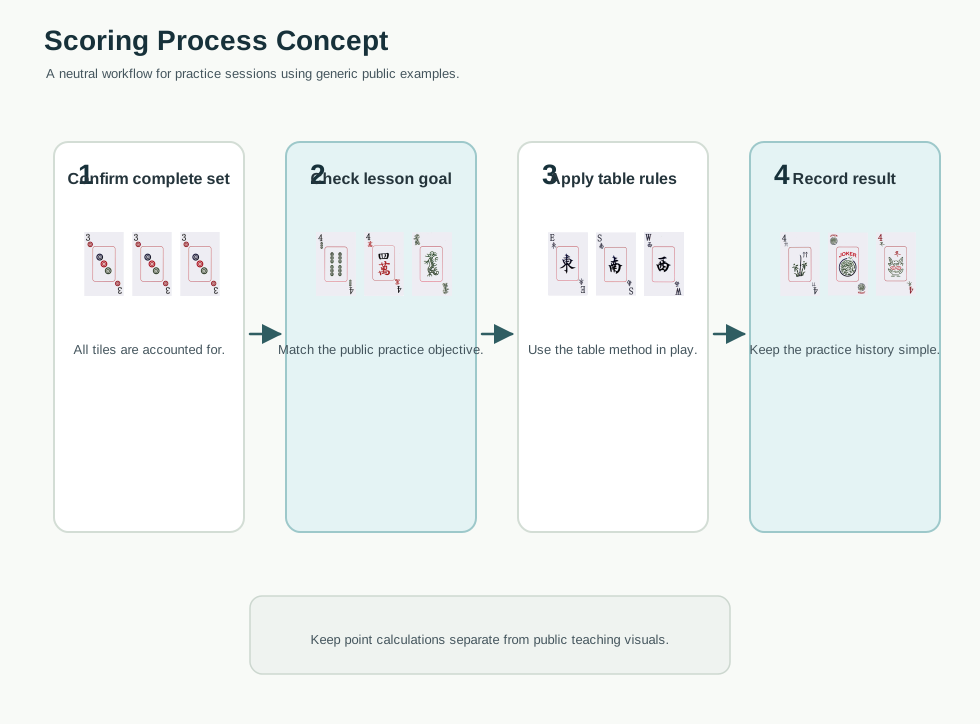
A safe scoring process map. It explains order of operations, not annual-card values.
Think of scoring as a sequence: confirm the hand, confirm the source everyone agreed to use, then settle according to that source and the table rules. If your table uses the NMJL card, exact values belong on the official card.
A good beginner habit is to narrate the order out loud: first, is the declaration accepted; second, what source are we using; third, what does that source say; fourth, how does this table record or settle it. That keeps the conversation orderly and prevents the website from becoming a replacement score sheet.
Use a table agreement before the first hand
Before the first hand, ask three plain questions: which official or table-agreed source are we using for exact values, how are wins recorded or settled, and are there any house or tournament-specific procedures we should know about. The answer may be simple, but asking early prevents a tense conversation after someone declares Mah Jongg.
Keep official, casual, class, and tournament contexts separate. A lesson can teach the workflow, but the exact settlement rule for a table belongs to that table's chosen source and the agreement made before play.
Handle special scoring situations calmly
When a win involves a called discard, an exposed hand, a joker question, a self-drawn tile, or a table-specific settlement habit, pause and separate two jobs. First verify that the hand is accepted under the source being used. Then check the scoring or settlement detail in that source or with the table host.
If two players remember the settlement differently, do not resolve it by guessing or by asking a public lesson for protected values. Stop the payment or tracking conversation, identify the agreed source, and let the table apply it consistently for the rest of the session.
Six scoring situations
Case: the learner wins but does not know the value
A player declares Mah Jongg and the table agrees the hand is complete. The learner asks the website for the exact annual-card value.
What should the learner do next?
Show answer
Answer: Use the official card or agreed table source for the exact value.
The site can teach the process, but it should not reproduce the annual protected value grid or protected hand values.
Completion comes before scoring.
Exact annual values stay with official materials.
The table should agree on the source before play.
Case: two tables score differently
A returning player notices that a casual table and a class table handle a settlement detail differently.
What is the right beginner response?
Show answer
Answer: Ask which rule source or table convention is being used before the hand starts.
Some scoring habits depend on source and table expectation. Clarifying early prevents frustration after a win.
Separate official rule source from table habit.
Do not assume every table settles the same way.
Case: scoring distracts from learning
A brand-new player wants to memorize all scoring before they can follow a turn.
What should they learn first?
Show answer
Answer: Learn tile recognition, setup, turn flow, and completion before scoring details.
Scoring is easier once the learner understands what happened in the hand.
Do not front-load scoring for absolute beginners.
Use scoring as a follow-up skill after completion.
Case: the table forgot to clarify settlement
A casual group starts playing quickly. After the first win, one player expects one settlement habit and another expected a friendly no-payment practice game.
What is the clean repair?
Show answer
Answer: Pause, agree on the source and settlement habit for the rest of the session, and avoid treating the website as the final scoring authority.
The conflict came from missing table agreement. Repair the process before more hands are played.
Clarify settlement before play.
Use the table-agreed source for exact outcomes.
Do not escalate a beginner practice hand into a rules argument.
Case: a joker question appears after the win
A player declares Mah Jongg, but another player is unsure whether a joker-related detail affects whether the hand is accepted before scoring.
What should happen first?
Show answer
Answer: Settle validity first, using the agreed source or a table judge/host if needed, then move to scoring.
Scoring only makes sense after the table agrees the hand is valid under the source being used.
Validity comes before value.
Joker uncertainty is not solved by guessing a score.
Exact card-specific details stay in official or agreed materials.
Case: tournament context enters a home table
A player mentions a tournament procedure during a relaxed home game and wants the table to use it for settlement.
How should a beginner frame the decision?
Show answer
Answer: Ask whether the table agreed to use tournament procedures today; if not, follow the home table's agreed source and convention.
Tournament procedures should not silently override the source a casual table chose before play.
Keep tournament and home contexts separate.
Agree on rule context before the hand.
Use explicit table language when context changes.
Practice cases with answers
Practice Case
What should a beginner confirm before discussing payment or value?
Practice Case
Why does this page avoid publishing a protected value grid?
Practice Case
At a new table, when should players clarify the scoring source?
Practice Case
A table is unsure whether a declared hand is accepted. What should happen before any score is discussed?
Practice Case
Which public-safe note is appropriate after a practice win?
Practice Case
A player brings up a tournament-only scoring procedure at a casual table. What is the best response?
Terms to keep straight
Common Mistakes
Trying to learn scoring before understanding completion.
Mixing casual table expectations with official or tournament contexts.
Treating a public lesson as a substitute for the official annual card.
Arguing about settlement after a win without knowing the table agreement.
Assuming every table handles the same win situation the same way.
Copying exact values or protected card structure into public practice notes.