Practice Case
One player says two tiles and the opposite player says one tile. What should happen before tiles move?
Learn
How to keep the Charleston clear, polite, and beginner-friendly.
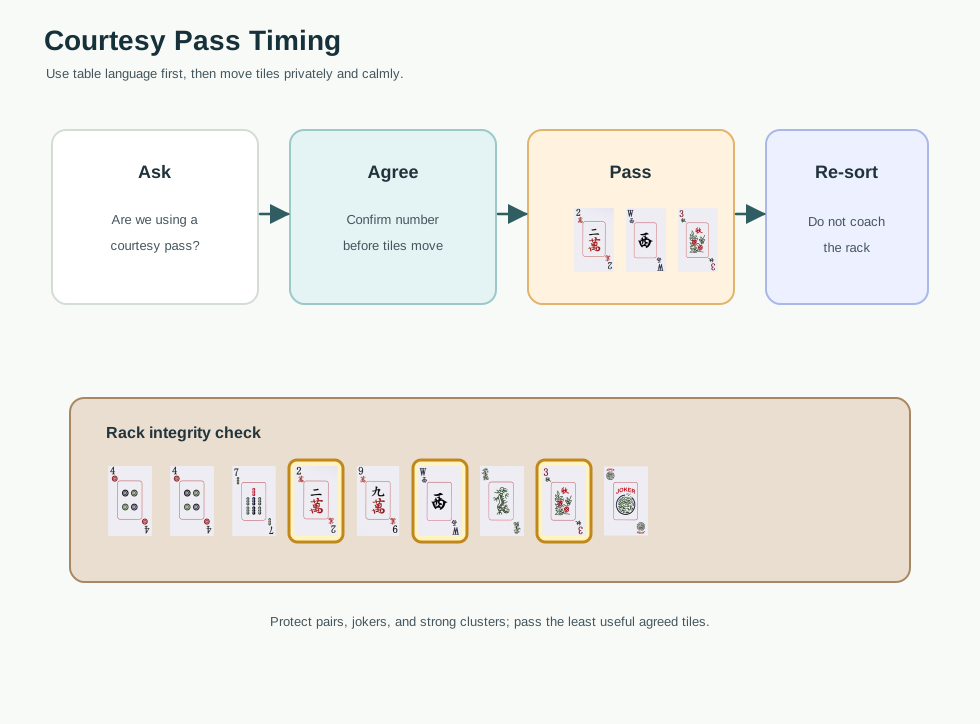
The practical goal is clarity, not pressure. Confirm whether the courtesy pass is being used, how many tiles are expected, and whether the exchange is mutual before anyone exposes or moves tiles.
A clear table script is: “Are we using a courtesy pass, how many tiles, and is it mutual?” Ask before tiles move. After agreement, pass privately, receive privately, and re-sort without telling another player what their rack should become.
Keep exact annual-card targets out of the conversation. It is enough to say zero, one, two, or three, or to say that your rack has no comfortable exchange. The official card stays private.
Treat courtesy pass language as a table convention layered on top of the Charleston flow. Beginners should avoid absolute claims such as “every table must do this exact exchange.” The safer habit is to confirm the local expectation, protect rack integrity, and keep strategy advice out of the exchange.
Use count language, not strategy language: I can do one, I can do two, or I would like zero. If the two players name different counts, pause and settle the count under the table's habit before any tile is revealed.
Practice Case
One player says two tiles and the opposite player says one tile. What should happen before tiles move?
Protect anchors such as clear pairs, jokers, strong clusters, and flexible support. If every tile has a job, a zero or smaller exchange may be cleaner than breaking the rack just to seem agreeable.
Keep the pace deliberate: agree on the count, select tiles privately, pass once, receive once, then re-sort. Do not narrate exact annual-card plans, do not show the rack for advice, and do not tell another player what they should pass.
A learner has no comfortable tile to exchange and worries that saying zero will seem impolite.
What should they do?
Answer: Use the table-agreed option to say zero or the smallest comfortable count without apologizing for the rack.
Courtesy means clear, respectful agreement. It does not require damaging the rack or revealing private strategy.
An experienced player starts telling a beginner which tiles are safe to give away during the courtesy pass.
What should the table repair?
Answer: Return to procedure language: confirm the count, let each player choose privately, then re-sort after the exchange.
Teaching the procedure is helpful. Coaching private rack strategy during the exchange breaks privacy and can expose too much information.
One player starts moving three tiles, while the opposite player thought the courtesy pass would be smaller.
What repair action should the table use?
Answer: Pause before tiles are revealed, agree on the number, then complete the exchange privately and re-sort.
The courtesy pass depends on clear mutual expectation. Fixing the number before exposure keeps the table calm.
A player places two tiles face up while the count is still being discussed.
What is the beginner-safe lesson for next time?
Answer: Agree on the count before moving tiles, and keep the exchange private until both players are ready.
Early exposure turns a simple etiquette step into a table-information problem. The repair habit is count first, tiles second.
Two experienced players know a local courtesy pass habit, but a new player has never used it and looks unsure before tiles move.
What should the table say?
Answer: Explain the table convention in one sentence, confirm the number and mutual exchange, then let each player choose privately.
The table can clarify timing and etiquette without giving annual-card direction or telling a player what to keep.
The courtesy pass is complete. A beginner immediately wants to discard before re-sorting the received tile or tiles.
What should happen before turn flow begins?
Answer: Re-sort the rack, notice what changed, then begin normal turn flow calmly.
The courtesy pass can change anchors, maybe tiles, and release candidates. Re-sorting bridges the passing phase into turn play.
Practice Case
What should a beginner do before a courtesy pass at a new table?
Practice Case
You have only one weak tile and the rest of the rack has clear support. What is the best beginner mindset?
Practice Case
Which courtesy-pass count can be acceptable if the rack has no comfortable exchange?
Practice Case
What should happen immediately after the courtesy pass is complete?
Practice Case
During a courtesy pass, a player starts telling another player exactly which tiles to pass. What is the best repair?