Practice Decision
You are four tiles away. Another player has two coordinated exposures and has stopped discarding dots. Which discard class should you prefer?
Blog
A concrete discard-defense system for ranking tiles by danger, tracking exposures, and switching from offense to denial.
Compare fit, readability, and table use before you buy.
Cold tiles are already heavily discarded and do not match visible exposures. Warm tiles fit a general table pattern but no one has shown commitment. Hot tiles connect to an exposure, a player who stopped passing that family, or a scarce tile group. Burning tiles complete a visible story for someone close. You will still guess sometimes, but ranking beats vibes.
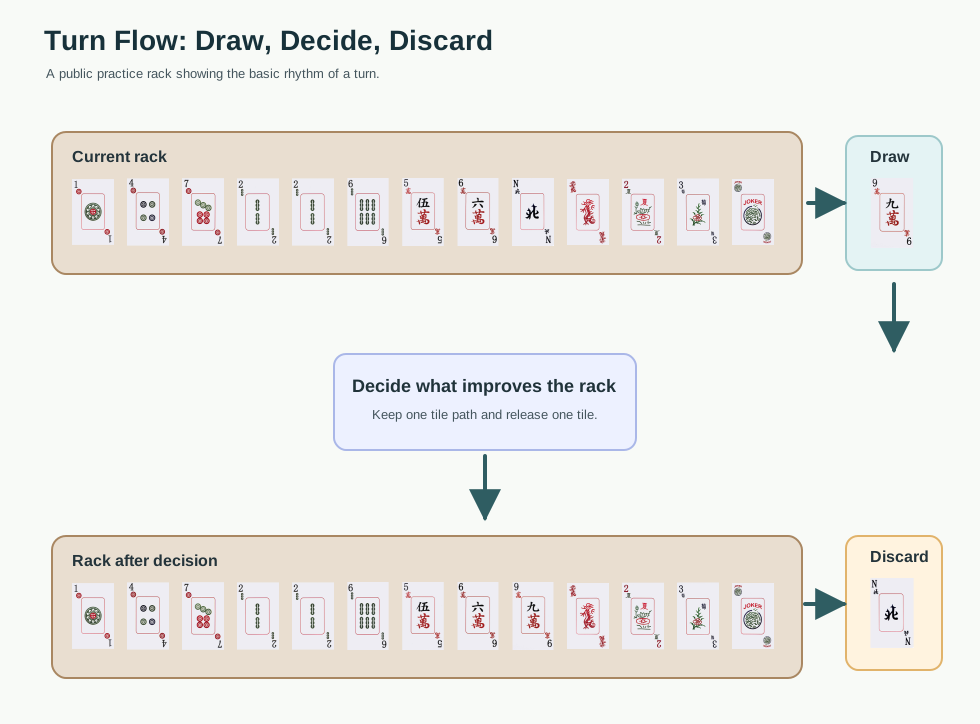
You do not need a photographic memory. Track your bottleneck tiles and the exposed families around the table. If your hand needs a specific natural pair, every visible copy matters. If an opponent has exposed a group, every matching discard becomes more dangerous. Focused counting is sustainable; counting everything is how players freeze.
When a player has two exposures, assume they may be close unless their discards prove otherwise. When a player has one exposure plus repeated saves from the same family, treat matching tiles as warm or hot. When a player calls late, upgrades an exposure with jokers, or stops discarding a family they used to throw, tighten your defense.
If you are four or more tiles away while another player is showing pressure, your job may shift from winning to not feeding. Break your least promising direction and discard the coldest tile, even if it feels passive. Saving one payout is part of long-term winning.
Before throwing, ask: does this tile hurt my top direction, does it match any exposure, has this family disappeared, is the wall late, and who benefits if I am wrong? If two answers point danger, find another discard or switch to defense. That 5-second scan is the difference between playing your rack and playing the whole table.
Practice Decision
You are four tiles away. Another player has two coordinated exposures and has stopped discarding dots. Which discard class should you prefer?
Use this article as a starting point, then ask about your own rack, table habit, product fit, or customer story.